

Don’t let Glue Ear affect your child’s development. Learn to identify the symptoms, explore treatment options, and find out how to restore clear hearing fast.
Introduction
Your child seems withdrawn, frequently says “what?” when you speak, turns up the television volume excessively, or performs poorly in school despite being bright and engaged. These subtle signs might not signal stubbornness or inattention—they could indicate glue ear, a common childhood condition affecting hearing and development. Glue ear, medically termed otitis media with effusion (OME), occurs when thick, sticky fluid accumulates in the middle ear without signs of acute infection. While typically painless and often resolving spontaneously, persistent glue ear can significantly impact speech development, learning, behavior, and quality of life. Understanding this condition—its causes, consequences, treatment options, and management strategies—empowers parents to recognize problems early and seek appropriate intervention protecting their child’s hearing and development.
What Is Glue Ear? Understanding Middle Ear Fluid
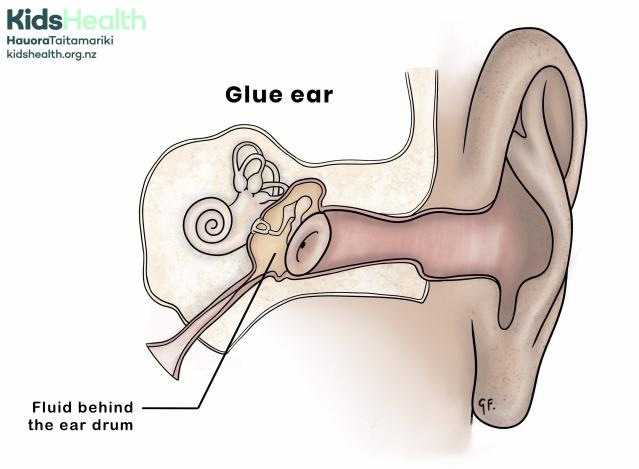
Glue ear (otitis media with effusion) describes persistent fluid accumulation in the middle ear space behind the eardrum without active infection. The fluid—ranging from thin and watery to thick and glue-like consistency—fills the air-filled cavity normally containing the tiny hearing bones (ossicles). This fluid buildup dampens sound vibrations traveling through the middle ear to the inner ear, causing temporary hearing loss.
Unlike acute otitis media (active ear infection) causing pain, fever, and illness, glue ear typically produces minimal discomfort. Children may not realize they’re hearing poorly, particularly if both ears are affected, making the condition challenging to detect without vigilant observation.
How Glue Ear Develops:
The Eustachian tube—a narrow passage connecting the middle ear to the back of the throat—normally ventilates the middle ear, equalizes pressure, and drains fluid. In glue ear, Eustachian tube dysfunction prevents proper drainage, allowing fluid to accumulate. This fluid may persist for weeks, months, or even years in chronic cases.
Prevalence:
Glue ear is extremely common in childhood:
- 90% of children experience at least one episode by age 10
- Peak incidence occurs between ages 2-5 years
- Affects approximately 20% of children at any given time
- Most common cause of hearing loss in children
- Boys and girls affected equally
Most cases resolve spontaneously within 3 months, though some persist longer, requiring intervention.
Recognizing Glue Ear Symptoms: Subtle Warning Signs
Because glue ear typically doesn’t cause pain, symptoms can be subtle and easily overlooked:
Hearing-Related Symptoms:
Hearing Difficulty: The primary symptom, though children may not complain. Signs include:
- Frequently asking “what?” or requesting repetition
- Not responding when called, especially from behind
- Turning up television or device volume excessively
- Sitting very close to television
- Speaking loudly or in monotone
- Mishearing words or instructions
Balance Problems: The middle ear plays a role in balance. Fluid accumulation may cause:
- Clumsiness or poor coordination
- Delayed gross motor skills
- Difficulty with activities requiring balance
Behavioral and Developmental Signs:
Speech and Language Delays: Hearing loss during critical developmental periods affects language acquisition:
- Limited vocabulary for age
- Unclear or immature speech patterns
- Grammatical errors persisting beyond typical age
- Difficulty pronouncing certain sounds
Behavioral Changes:
- Inattention or appearing distracted
- Behavioral problems from frustration with communication difficulties
- Social withdrawal or isolation from peers
- Preference for solitary play
- Irritability or mood changes
Academic Difficulties:
- Poor school performance despite adequate intelligence
- Difficulty following instructions
- Problems with reading and phonics
- Lack of participation in class discussions
Other Symptoms:
- Ear fullness or pressure sensation (if child can articulate)
- Occasional mild ear discomfort
- Crackling or popping sounds in ears
- Sense of hearing underwater
Similar to how chronic respiratory conditions require attentive symptom monitoring, recognizing glue ear’s subtle manifestations enables timely intervention preventing developmental impacts.
Causes and Risk Factors: Why Glue Ear Develops
Eustachian Tube Dysfunction:
The fundamental problem in glue ear involves Eustachian tubes that don’t ventilate and drain the middle ear properly. In young children, Eustachian tubes are:
- Shorter and more horizontal (less efficient drainage)
- Narrower and more easily blocked
- Surrounded by adenoid tissue that may obstruct openings
Contributing Factors:
Upper Respiratory Infections: Colds, flu, and other respiratory infections cause inflammation and congestion blocking Eustachian tubes. Glue ear commonly follows acute ear infections or respiratory illnesses.
Enlarged Adenoids: These immune tissues at the back of the throat can physically block Eustachian tube openings, particularly in children ages 3-7 years.
Allergies: Seasonal or environmental allergies cause nasal and throat inflammation affecting Eustachian tube function, similar to how environmental factors affect respiratory health.
Exposure to Smoke: Passive smoking irritates respiratory passages and increases glue ear risk significantly.
Bottle-Feeding Position: Feeding babies lying flat allows milk to enter Eustachian tubes.
Pacifier Use: Prolonged pacifier use beyond infancy increases risk.
Daycare Attendance: Frequent exposure to respiratory infections in group settings increases glue ear likelihood.
Cleft Palate: Structural abnormalities impair Eustachian tube function.
Down Syndrome and Craniofacial Conditions: Anatomical differences increase susceptibility.
Age: Peak occurrence in preschool years reflects Eustachian tube immaturity.
Season: Winter months see increased incidence due to higher respiratory infection rates.
Family History: Genetic susceptibility plays a role.
Diagnosis: How Doctors Identify Glue Ear
Medical History:
Your doctor asks about hearing difficulties, speech development, behavior changes, recent infections, allergies, and risk factors.
Physical Examination:
Otoscopy: Examining the eardrum with an otoscope reveals:
- Dull, opaque appearance (healthy eardrums are translucent)
- Amber, gray, or bluish discoloration
- Retracted or bulging eardrum
- Visible air-fluid levels or bubbles
- Reduced or absent light reflex
Pneumatic Otoscopy: Gentle air puffs assess eardrum mobility. Fluid-filled middle ears show minimal movement.
Tympanometry:
The gold standard objective test measures eardrum movement in response to air pressure changes. Results show characteristic flat or type B curves indicating middle ear fluid.
Acoustic Reflectometry:
Measures sound reflection from the eardrum, helping confirm fluid presence.
Hearing Tests (Audiometry):
Essential for documenting hearing loss severity and type:
- Play Audiometry: For children ages 2-5 years
- Pure Tone Audiometry: For older children
- Speech Audiometry: Assesses speech understanding
Typically shows mild to moderate conductive hearing loss (20-40 decibel loss).
Tympanocentesis:
Rarely performed procedure aspirating middle ear fluid for bacterial culture in persistent cases not responding to treatment.
According to the National Institute on Deafness and Other Communication Disorders, proper diagnosis and monitoring ensure appropriate management decisions and prevent unnecessary interventions.
Treatment Options: Managing Glue Ear Effectively
Watchful Waiting (Active Surveillance):
The first-line approach for most glue ear cases involves monitoring without immediate intervention, as approximately 50% resolve spontaneously within 3 months:
- Regular follow-up appointments (every 3 months)
- Repeat hearing and tympanometry tests
- Speech and language monitoring
- School performance observation
- Treatment initiated if fluid persists beyond 3 months with hearing loss
When Watchful Waiting Is Appropriate:
- Recent onset (under 3 months duration)
- Mild hearing loss or unilateral involvement
- No speech or developmental concerns
- No significant impact on quality of life
Medical Management:
Treating Underlying Conditions:
- Allergy management with antihistamines or nasal steroids
- Controlling environmental allergens
- Smoke exposure elimination
- Treating chronic sinusitis
Autoinflation Techniques:
For older children (typically over 3 years), special balloons or devices that children blow through create pressure changes helping open Eustachian tubes and drain fluid. Studies show modest effectiveness with regular use.
What Doesn’t Work:
Research shows the following are NOT effective for glue ear:
- Antibiotics (no active infection to treat)
- Oral decongestants or antihistamines (unless specific allergy indication)
- Oral or nasal corticosteroids
- Most complementary therapies lack evidence
Surgical Intervention:
Grommets (Tympanostomy Tubes/Ventilation Tubes):
The most effective treatment for persistent glue ear involves surgically inserting tiny tubes through eardrums to:
- Ventilate middle ear space
- Allow fluid drainage
- Equalize pressure
- Immediately restore hearing

Indications for Grommets:
- Persistent fluid beyond 3-6 months with hearing loss
- Bilateral hearing loss affecting development or learning
- Recurrent acute ear infections
- Speech and language delays
- Significant quality of life impact
- Structural eardrum changes
The Procedure:
- Brief general anesthesia (10-15 minutes)
- Day surgery (outpatient)
- Tiny incision in eardrum (myringotomy)
- Fluid suctioned out
- Small tube inserted maintaining opening
- Tubes typically fall out naturally after 6-18 months
- Very safe with high success rates
Post-Grommet Care:
- Keep water out of ears (earplugs for swimming/bathing)
- Watch for tube blockage or displacement
- Ear drops if infection develops
- Regular follow-up appointments
Adenoidectomy:
Removing enlarged adenoids may be recommended alongside or before grommets, particularly for:
- Children over 4 years
- Very enlarged adenoids
- Recurrent glue ear after previous grommets
- Nasal obstruction or sleep-disordered breathing
Studies show adenoidectomy reduces glue ear recurrence risk.
Managing Hearing Loss: Supporting Your Child
Communication Strategies:
- Face your child when speaking: Allows lip-reading and visual cues
- Speak clearly at normal volume: Shouting distorts speech
- Reduce background noise: Turn off TV/radio during conversations
- Rephrase rather than just repeating: Helps understanding
- Check comprehension: Ensure child understood instructions
- Use visual aids and gestures: Supplement verbal communication
Educational Support:
- Inform teachers about hearing difficulties
- Request preferential seating (front of classroom)
- Consider FM systems or classroom amplification
- Provide written instructions alongside verbal
- Monitor academic progress closely
- Arrange speech and language therapy if needed
Home Modifications:
- Reduce household noise levels
- Use visual attention-getting (waving, touching shoulder)
- Ensure adequate lighting for lip-reading
- Be patient with communication attempts
Supporting children through glue ear requires similar comprehensive approaches used for managing chronic health conditions.
Prevention Strategies: Reducing Glue Ear Risk
Breastfeeding:
Breastfeed exclusively for at least 6 months when possible. Breast milk provides immune protection and bottle-feeding mechanics differ favorably.
Feeding Position:
Hold babies upright (30-45 degrees) during bottle-feeding. Never prop bottles or allow feeding while lying flat.
Smoke-Free Environment:
Eliminate all secondhand smoke exposure—the single most important modifiable risk factor.
Pacifier Limitation:
Discontinue pacifiers after 6 months of age, particularly during sleep.
Infection Prevention:
- Frequent handwashing
- Keep immunizations current (flu, pneumococcal)
- Limit daycare exposure when feasible
- Practice good preventive care
Allergy Management:
Control environmental allergens and treat allergies appropriately.
Healthy Nutrition:
Maintain balanced diet supporting immune function and overall health through proper nutrition.
Long-Term Outlook: What to Expect
Natural Resolution:
Most children outgrow glue ear tendency by age 7-8 years as Eustachian tubes mature, lengthen, and function more effectively.
Prognosis:
- Excellent with appropriate management
- Hearing typically returns to normal once fluid clears
- Speech and language usually catch up with therapy if needed
- Academic performance improves after hearing restoration
- No long-term complications with proper treatment
Follow-Up:
Even after resolution, continue monitoring as recurrence is common until Eustachian tubes fully mature.
Frequently Asked Questions About Glue Ear
How long does glue ear typically last?
Duration varies considerably. Approximately 50% of cases resolve within 3 months without treatment, 75% within 6 months, and 90% within one year. However, some children experience chronic glue ear persisting beyond one year or recurring repeatedly. Factors affecting duration include age, underlying causes, season, and individual anatomy. Persistent cases beyond 3-6 months with hearing loss typically warrant intervention rather than continued observation.
Will grommets cure glue ear permanently?
Grommets don’t cure glue ear but manage it effectively while Eustachian tubes mature. They provide immediate hearing restoration and prevent fluid reaccumulation while in place. After tubes fall out (typically 6-18 months), some children remain fine as they’ve outgrown the condition, while others experience recurrence requiring repeated grommet insertion. Most children need grommets only once or twice before naturally outgrowing glue ear tendency.
Can glue ear cause permanent hearing loss?
Glue ear itself causes temporary conductive hearing loss that completely resolves when fluid clears. However, prolonged untreated glue ear during critical developmental periods can cause permanent speech and language delays if intervention is delayed too long. Very rarely, chronic glue ear causes permanent eardrum changes or chronic ear disease affecting long-term hearing. Appropriate monitoring and timely treatment when indicated prevent these complications.
Is glue ear painful for children?
Unlike acute ear infections, glue ear typically causes minimal or no pain. Children may experience mild ear fullness, pressure, or occasional discomfort, but significant pain is unusual. The main issue is hearing loss and its developmental consequences rather than pain. If your child with glue ear develops ear pain, fever, or appears unwell, they may have developed a superimposed acute infection requiring medical evaluation.
Should my child avoid swimming with glue ear?
Children with glue ear (before grommets) can swim normally—water cannot enter the middle ear through an intact eardrum. However, after grommet insertion, water precautions become important. Most doctors recommend keeping water out of ears during swimming and bathing using well-fitted earplugs or custom molds. Surface swimming with earplugs is generally safe, though diving should be avoided. Follow your surgeon’s specific recommendations, as practices vary.
Empowering Parents to Protect Hearing and Development
Glue ear, while common and usually self-limiting, requires vigilant monitoring and appropriate intervention when persistent. The subtle nature of symptoms means parents must actively watch for signs of hearing difficulty rather than waiting for children to complain. Early identification, proper diagnosis, and timely treatment when necessary prevent speech delays, learning difficulties, and behavioral problems that can affect children for years.
Don’t dismiss concerns about your child’s hearing, speech, or behavior. Trust your parental instincts—you know your child best. If you suspect hearing problems, request medical evaluation including proper hearing tests and tympanometry. Demand appropriate follow-up rather than accepting “they’ll outgrow it” without monitoring.
When glue ear persists beyond 3 months with documented hearing loss, don’t hesitate to discuss treatment options including grommets. This safe, effective procedure immediately restores hearing, allowing children to engage fully in learning, social interaction, and development. The benefits far outweigh minimal risks for appropriately selected candidates.
Remember that protecting your child’s hearing during critical developmental years invests in their future educational success, social skills, and quality of life. Stay informed, advocate strongly, and work collaboratively with healthcare providers ensuring your child receives the monitoring and treatment they need.
If you’re concerned about your child’s hearing or have been told they have glue ear, consult your pediatrician or pediatric ENT specialist for comprehensive evaluation and personalized management recommendations.