
Comprehensive guide to vaccine safety monitoring strategies and global systems including VAERS, VSD, V-safe, and WHO surveillance. Learn how CDC, FDA, and international organizations ensure vaccines remain safe and effective through rigorous post-market monitoring.
Introduction
Vaccines represent one of the greatest achievements of science and public health, contributing to dramatic declines in vaccine-preventable diseases. Because of vaccines, smallpox no longer exists outside laboratories, and diseases like diphtheria and tetanus that were once common before vaccination now occur at all-time lows. Yet ensuring vaccine safety doesn’t end when regulatory approval is granted. CDC and FDA monitor vaccine safety using different systems that work together, creating comprehensive surveillance detecting potential problems quickly and enabling prompt public health action.
Why Vaccine Safety Monitoring Matters
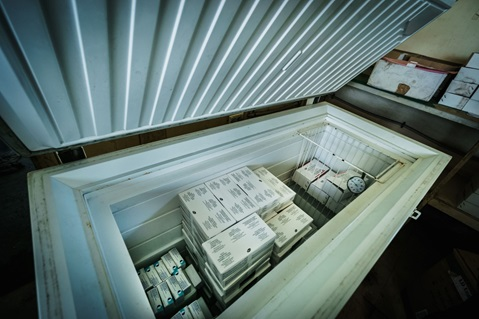
After vaccines receive FDA approval for public use, scientists continue analyzing safety data through ongoing surveillance systems. This post-licensure monitoring proves critical because clinical trials, though rigorous, involve limited participant numbers and controlled conditions. Rare adverse events affecting perhaps one in 100,000 or one in a million vaccinated individuals may not emerge until millions receive immunizations. Additionally, real-world conditions differ from clinical trial protocols—vaccines are administered to diverse populations including pregnant women, individuals with underlying conditions, and age groups potentially underrepresented in trials.
The balance between vaccine benefits and risks must be continuously assessed. Vaccines, like any medical product, can have side effects—severe allergic reactions, though rare, can occur after vaccination. CDC monitors for a range of side effects after vaccination and acts quickly to notify the public of new findings or, in some cases, to remove products from the market when needed. Ultimately, the benefits of vaccination outweigh the risks, but maintaining public trust requires transparent, rigorous safety monitoring.
The Multi-Layered U.S. Vaccine Safety System
The U.S. vaccine safety monitoring system consists of multiple components including passive and active surveillance systems such as VAERS, VSD, Sentinel, PRISM, and V-safe. These systems collectively help detect and assess potential vaccine-related adverse events. Each system serves distinct purposes, collecting different information types enabling comprehensive safety evaluation.
VAERS: The Early Warning System
The Vaccine Adverse Event Reporting System (VAERS) is co-managed by CDC and FDA, serving as the nation’s early warning system to detect possible safety signals for all U.S.-approved and authorized vaccines. VAERS accepts and analyzes reports of possible health problems that happen after vaccination, functioning as a hypothesis-generating surveillance mechanism.
Healthcare providers and vaccine manufacturers are required to report specific adverse events following vaccination to VAERS, including those listed as contraindications. However, patients and caregivers can also submit reports, making VAERS accessible to anyone concerned about post-vaccination health problems. This open reporting structure enables broad adverse event capture but also introduces limitations—VAERS data cannot definitively establish causation between vaccination and reported events.
How VAERS Works:
- Reports are received continuously from healthcare providers, manufacturers, and the public
- CDC and FDA staff monitor for potential safety concerns or unusual patterns
- When serious events are reported, staff can request additional information including medical records or autopsy reports
- Multiple similar reports trigger further investigation using complementary systems
VAERS is designed to be sensitive and hypothesis-generating, and its signals can then be analyzed using other systems that are more specific and hypothesis-confirming. The system’s openness represents both strength and limitation—while capturing diverse adverse event reports, it also includes temporally associated events that may not be causally related to vaccination.
VSD: Active Surveillance with Electronic Health Records
The Vaccine Safety Datalink (VSD) is a collaborative project between CDC and healthcare organizations across the United States, established in 1990 to monitor vaccine safety and conduct studies about rare and serious adverse events following immunization. VSD uses electronic health record data from its member sites to assess vaccine safety and detect adverse events in near-real time.
Currently, 11 full participant sites provide EHR data shared under a common data model with standard data dictionaries. This standardization enables consistent analysis across diverse healthcare systems, representing approximately 13 million people annually. Researchers analyze EHR data weekly to determine if rates of specific adverse events of special interest following vaccination exceed rates in comparison groups.
VSD Advantages:
- Large, representative population enabling rare event detection
- Objective electronic health records reducing reporting bias
- Near-real-time monitoring detecting signals quickly
- Ability to conduct rigorous epidemiological studies
- Hypothesis-confirming analyses validating VAERS signals
VSD findings inform U.S. vaccine safety recommendations, with timely information provided to the Advisory Committee on Immunization Practices (ACIP), which develops recommended vaccination schedules for children and adults.
V-safe: Direct Patient Reporting Through Technology
V-safe represents one of CDC’s systems that monitors vaccine safety in the United States through smartphone-based active surveillance. Originally launched in December 2020 to monitor COVID-19 vaccine safety, V-safe now includes RSV vaccines, allowing people to share how they feel after vaccination.
Over 10 million people have registered for V-safe, completing more than 151 million surveys about their experiences following vaccination. After signing up, V-safe sends confidential check-ins via text message or email asking how participants feel after vaccination. Completing each check-in, even when experiencing no side effects, helps CDC better monitor vaccine safety.
V-safe Benefits:
- Rapid data collection directly from vaccinated individuals
- Large participant numbers providing robust datasets
- Inclusion of populations potentially excluded from clinical trials
- Direct reporting pathway to VAERS for medical care seekers
- Real-time safety monitoring complementing other systems
V-safe data can help CDC understand side effects experienced shortly after vaccination, providing information from groups such as pregnant women and young children who may have been excluded from clinical trials.
CISA: Expert Clinical Assessment Network
The Clinical Immunization Safety Assessment (CISA) Project is a network of vaccine safety experts from CDC, research centers, and other partners providing clinical consultation on complex adverse events following immunization. CISA assists healthcare providers managing patients with potential vaccine-related reactions and conducts clinical research improving understanding of vaccine safety.
FDA’s Complementary Monitoring Systems
Sentinel Initiative and PRISM
The FDA’s Sentinel Initiative represents America’s national electronic system for monitoring safety of FDA-regulated medical products. The Sentinel System includes PRISM (Post-licensure Rapid Immunization Safety Monitoring), which conducts near-real-time surveillance of vaccines using health insurance claims data. This system analyzes millions of individuals’ data weekly, detecting potential safety signals soon after new vaccines are introduced or recommendations change.
Global Vaccine Safety Monitoring
WHO Global Advisory Committee on Vaccine Safety (GACVS)

The World Health Organization’s GACVS provides independent, authoritative guidance to WHO on vaccine safety issues potentially having global importance. GACVS reviews emerging vaccine safety concerns from around the world, evaluating causality and providing recommendations for further action. The committee works closely with the WHO Programme for International Drug Monitoring, strengthening global vaccine pharmacovigilance.
WHO’s VigiBase: The WHO Programme for International Drug Monitoring maintains VigiBase, the world’s largest database of reported potential side effects of medicines including vaccines. Over 130 countries contribute adverse event reports, creating a global surveillance network detecting signals that might not be apparent in single-country systems.
Regional Monitoring Networks
Various regional networks complement global surveillance:
- European Medicines Agency pharmacovigilance system
- Brighton Collaboration standardizing adverse event definitions
- National regulatory authorities in countries worldwide
- Regional technical groups coordinating multinational surveillance
Frequently Asked Questions About Vaccine Safety Monitoring
How can vaccine safety be monitored when millions are vaccinated in short timeframes?
Modern vaccine safety systems utilize advanced technology and large datasets enabling near-real-time surveillance even during mass vaccination campaigns. The COVID-19 vaccines underwent the most intensive safety monitoring in U.S. history, with systems analyzing millions of vaccinations weekly. Automated algorithms detect unusual patterns quickly, triggering immediate investigation. V-safe alone collected data from over 10 million people, while VSD continuously monitored electronic health records from 13 million individuals. This multi-system approach, combining passive reporting through VAERS with active surveillance via VSD and V-safe, creates comprehensive safety nets detecting problems rapidly even during unprecedented vaccination efforts.
What happens when a potential safety signal is detected?
When monitoring systems identify potential safety signals, a rigorous investigation process begins. First, scientists analyze whether reported events occur more frequently than expected compared to background rates in unvaccinated populations. They examine temporal relationships, biological plausibility, and consistency across different surveillance systems. If investigation confirms a safety concern, regulatory agencies take appropriate action—this might include updating vaccine information sheets, issuing health alerts to providers, restricting use in certain populations, or in extreme cases, withdrawing vaccines from the market. Throughout investigation and decision-making, findings are communicated transparently to healthcare providers and the public.
Can I trust VAERS data, given that anyone can submit reports?
VAERS data requires careful interpretation. While open reporting enables broad adverse event capture, it means reports aren’t verified for accuracy or causation. A report to VAERS doesn’t mean the vaccine caused the reported event—it simply indicates temporal association. However, VAERS serves its intended purpose as an early warning system generating hypotheses for investigation. When VAERS identifies potential signals, scientists use complementary systems like VSD with objective electronic health records to confirm whether associations represent genuine safety concerns. Learn more about interpreting VAERS data at the CDC Vaccine Safety Systems website.
How do scientists distinguish between coincidental events and vaccine-caused adverse effects?
Determining causation requires sophisticated epidemiological analysis. Scientists compare adverse event rates in vaccinated groups versus unvaccinated comparison groups, accounting for background rates of conditions occurring regardless of vaccination. They examine temporal relationships—genuine vaccine reactions typically occur within specific timeframes after administration. Biological plausibility is assessed—does a mechanistic pathway explain how the vaccine might cause the reported effect? Consistency across multiple surveillance systems and populations strengthens evidence. Controlled studies, including re-challenge cases where effects recur with subsequent doses, provide additional causation evidence. This multifaceted approach distinguishes true vaccine-related events from coincidental occurrences.
Are vaccine safety monitoring systems the same in all countries?
While principles remain consistent globally, specific systems vary by country based on healthcare infrastructure, regulatory frameworks, and resources. The United States maintains one of the most comprehensive systems with VAERS, VSD, V-safe, CISA, and FDA’s Sentinel. Other countries employ similar multi-component approaches—Canada uses CAEFISS, the United Kingdom operates Yellow Card Scheme, Australia maintains TGA’s Database of Adverse Event Notifications. The WHO coordinates global surveillance through VigiBase, enabling signal detection that might not be apparent in single-country data. International collaboration through organizations like the Brighton Collaboration harmonizes adverse event definitions, facilitating cross-border comparisons and enhancing global vaccine safety.
Continuous System Improvement
Although the COVID-19 pandemic drew greater public attention to vaccine safety and monitoring systems, there is still limited understanding of the system’s full architecture, how each component operates, and how they are intended to interact to form an integrated safety net. Recent white papers analyzing the U.S. vaccine safety monitoring system highlight opportunities for improvement including enhanced public communication about how systems work, better integration among complementary surveillance components, and continued investment in technology enabling more sophisticated analyses.
The FDA and CDC actively engage stakeholders, hosting public workshops defining how emerging technologies like artificial intelligence integrate into safety monitoring. AI-powered tools like WHO’s Peek analysis platform scan open online sources including social media for new content related to vaccine safety, providing early warning of potential concerns circulating in public discourse before formal adverse event reports are filed.
Conclusion: Vigilance Protecting Public Health
Vaccine safety monitoring represents a continuous, multi-faceted endeavor protecting public health while maintaining confidence in immunization programs. The layered U.S. system combining VAERS’s broad surveillance, VSD’s rigorous epidemiological analysis, V-safe’s active patient engagement, and CISA’s expert clinical assessment creates comprehensive safety nets detecting problems quickly and enabling prompt action.
Global collaboration through WHO’s GACVS and VigiBase extends surveillance worldwide, detecting signals that might not emerge in single-country systems. As vaccination programs expand to address emerging infectious diseases and new vaccine technologies like mRNA platforms become routine, robust safety monitoring grows ever more critical.
For healthcare providers, understanding these systems enables informed conversations with patients about vaccine safety. For the public, awareness of comprehensive monitoring provides reassurance that vaccines are continuously scrutinized throughout their use. For policymakers, investment in safety surveillance infrastructure represents essential public health commitment ensuring vaccination programs remain both effective and trustworthy. The vigilance embodied in global vaccine safety systems protects millions while preserving confidence in one of medicine’s most powerful disease prevention tools.