

Discover the powerful two-way link between mental & dental health. Learn how anxiety & depression cause oral disease, and how tooth loss affects your mind. Break the cycle.
Introduction: More Than Just a Smile
We often think of a healthy smile as a sign of good brushing habits or regular dental visits. However, beneath the surface lies a profound and two-way relationship between your mental well-being and your oral health that is frequently overlooked. This connection is neither simple nor one-directional; it’s a continuous cycle where each profoundly influences the other. Poor mental health can lead to neglect and disease in the mouth, while the pain, appearance, and social impact of poor oral health can devastate mental well-being. Understanding this link is crucial for breaking the cycle. This article explores the powerful evidence behind this connection, its impact on both patients and professionals, and the innovative, integrated solutions that offer hope for better overall health.
The Undeniable Two-Way Street: How Mental and Oral Health Interact
The mouth is not an isolated system. A substantial body of research confirms a bidirectional relationship between mental and oral health, meaning each can be both a cause and a consequence of the other. This creates a challenging cycle that can be difficult to escape without targeted intervention.
- From Mind to Mouth: Mental health conditions like depression, anxiety, and severe disorders such as schizophrenia create significant barriers to oral health. Symptoms like lack of motivation, fatigue, and social withdrawal can make daily brushing and flossing feel insurmountable. Furthermore, the medications that treat these conditions often have side effects like dry mouth (xerostomia), which drastically increases the risk of tooth decay and gum disease.
- From Mouth to Mind: Conversely, poor oral health exerts a heavy toll on psychological well-being. Tooth loss, chronic pain, and visible decay can lead to crippling self-consciousness, social anxiety, and isolation. The inability to eat, speak, or smile with confidence can fuel feelings of low self-esteem and depression, creating a feedback loop that worsens both conditions.
The Impact on Patients: When Mental Health Challenges the Mouth
Mental health disorders influence oral health through behavioral, biological, and socioeconomic pathways.
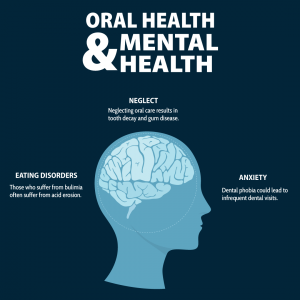
- Behavioral and Symptom-Driven Neglect: The core symptoms of many mental illnesses directly conflict with oral hygiene. The anhedonia and lack of energy in depression, the obsessive rituals in OCD, or the disordered thinking in schizophrenia can all disrupt the routine and motivation required for consistent self-care. Dental anxiety, which is itself a recognized phobia, affects a significant portion of the population and is highly comorbid with other anxiety disorders, depression, and mood disorders. This fear leads to avoidance, allowing minor issues to become major, painful problems.
- Medication Side Effects: Many psychotropic medications, including common antidepressants and antipsychotics, reduce salivary flow. Saliva is the mouth’s natural cleanser and neutralizer. Without it, patients are far more susceptible to rampant tooth decay (caries) and fungal infections. Some medications can also cause involuntary teeth grinding (bruxism), leading to worn teeth, jaw pain, and headaches.
- Socioeconomic and Access Barriers: Individuals with mental illness often face overlapping challenges, including poverty, unstable housing, and difficulty navigating healthcare systems. These factors limit access to preventive dental care and treatment, allowing oral disease to progress unchecked.
The consequences are clear and severe: people with serious mental illness are three times more likely to lose all their teeth, and those with eating disorders face a five times greater risk of tooth erosion. Periodontal (gum) disease is also more severe and progresses faster in individuals experiencing chronic stress or depression, partly due to stress-induced inflammation.
The Impact on Professionals: The Dental Team’s Mental Wellbeing
The mental health conversation in dentistry isn’t limited to patients. Dental professionals themselves face a workplace environment rife with unique stressors, leading to high levels of burnout, anxiety, and depression within the profession.
Key stressors identified include:
- Regulatory and Litigation Fears: The fear of making a mistake and facing complaints or litigation is consistently cited as a top stressor.
- Performance Pressure: The precision-based, time-bound nature of clinical procedures, often on an anxious patient, creates intense pressure.
- Business Demands: For practice owners and associates, managing the business aspects—finances, staffing, and patient satisfaction—adds a significant layer of stress.
- Physical Demands: Long hours in physically awkward positions take a toll on the body, which can affect mental resilience.
A systematic review found a troubling lack of primary prevention programs to support dental teams. While interventions like counseling (tertiary prevention) and psychoeducational workshops (secondary prevention) show benefit, there is an urgent need for systemic, workplace-level changes to protect the mental health of those who care for our smiles.
Breaking the Cycle: Pathways to Integrated Care
Recognizing the inseparable link has given rise to the powerful concept of “Dental as Mental Health”—the idea that treating oral health is an effective strategy for improving mental health outcomes, and vice versa. The most promising solution lies in integrated care models that break down the traditional walls between medical, dental, and behavioral health.
Models of Integrated Care
These models vary in structure but share the goal of coordinated, whole-person care.
| Model Name/Example | How It Works | Key Benefits & Outcomes |
|---|---|---|
| Co-location | Mental health professionals and dental providers work in the same facility. | Enables immediate consultation, warm handoffs, and shared treatment plans. Reduces stigma and improves access. |
| Embedded Screening (CHCSCT Model) | Dental clinics screen all patients for depression/anxiety (e.g., using PHQ-9). A Behavioral Health Consultant (BHC) is on-site for immediate intervention. | Identifies unmet mental health needs in a non-traditional setting. At CHCSCT, 12% of screened dental patients needed and received same-day behavioral health support. |
| “No Wrong Door” Integration | Screening happens in both directions. Mental health providers also ask about oral pain, last dental visit, etc., and refer to dental services. | Creates multiple access points for care. Normalizes conversation about overall health in all clinical settings. |
| Specialized Programs (e.g., Project FLOSS) | Programs target specific populations, like providing comprehensive dental care to people in substance use treatment. | Project FLOSS showed that dental care increased retention in recovery programs and led to higher rates of long-term recovery. |
Practical Strategies for Patients and Providers
- For Patients: If you struggle with mental health and dental care:
- Communicate Openly: Tell your dentist about your anxiety, diagnoses, and medications. A good provider will adapt.
- Seek Support: Ask about sedation options (like nitrous oxide), shorter appointments, or bring a support person.
- Manage Side Effects: Use xylitol gum/mints, high-fluoride toothpaste, and saliva substitutes to combat medication-induced dry mouth.
- For Dental Professionals:
- Adopt a Trauma-Informed Approach: Recognize that fear or neglect may stem from trauma or illness, not indifference.
- Screen and Refer: Incorporate simple mental well-being questions into health histories and know local resources for referral.
- Prioritize Prevention: For high-risk patients, focus on preventive strategies like fluoride varnish and more frequent cleanings.
The Future and the Bigger Picture

The integration of oral and mental health is a critical frontier in healthcare. It aligns with a holistic understanding of health and has implications beyond individual wellness. For example, emerging research is investigating the oral-brain axis, exploring how oral bacteria and inflammation may be linked to neurodegenerative conditions like Alzheimer’s disease.
Public health initiatives must also address this link. As discussed in our analysis of the sugar tax, policy can shape consumption and health outcomes. Similarly, designing healthcare systems that facilitate, rather than hinder, integrated care is a public health imperative. This requires a shift in training, funding, and interprofessional collaboration, guided by ethical frameworks that prioritize comprehensive patient well-being.
FAQs: Your Questions Answered
1. I have severe anxiety about the dentist. Is this a recognized mental health condition?
Yes. Dental anxiety (or dental phobia) is a recognized specific phobia. It is also highly comorbid with other anxiety disorders, depression, and mood disorders. If your fear causes you to avoid care, it’s important to address it. Talk to your dentist about your fears; they can work with you on a plan, which may include behavioral techniques, sedation, or a referral to a therapist specializing in phobias.
2. My antidepressant gives me a terribly dry mouth. What can I do to protect my teeth?
This is a common and serious side effect. You must be extra vigilant with prevention:
- Stimulate Saliva: Chew sugar-free gum (with xylitol), suck on sugar-free lozenges, and stay hydrated.
- Maximize Fluoride: Use a high-fluoride prescription toothpaste (like 5000ppm fluoride) at night. Apply it, spit out the excess, and do not rinse with water to leave a protective layer.
- Avoid Sugary/ Acidic Drinks: Sip water instead of soda, juice, or coffee throughout the day.
- See Your Dentist More Often: You may need professional cleanings and fluoride treatments every 3-4 months instead of every 6.
3. Can stress and depression actually cause gum disease?
While stress doesn’t directly cause gum disease, it is a significant risk factor that can worsen it. Chronic stress affects your immune system, making it harder for your body to fight off the bacterial infections that cause periodontitis. Stress can also lead to behaviors like neglecting oral hygiene, smoking, or poor diet, which further increase your risk. The inflammation from severe gum disease may also, in turn, negatively affect your mental state.
4. What is the most important thing a dentist can do for a patient with a known mental illness?
The most important thing is to create a safe, non-judgmental, and collaborative environment. Obtain a thorough health history including medications, listen to the patient’s concerns and capabilities, and tailor the preventive and treatment plan to their specific situation. This person-centered approach, focused on building trust and reducing barriers, is the foundation of effective care for anyone, especially those managing mental health challenges.
Conclusion: Towards Wholeness
The link between mental and oral health is undeniable and consequential. It reveals that a smile is not merely a cosmetic feature but a barometer of overall well-being. By moving away from treating the mouth in isolation and embracing integrated, compassionate care models, we can break the debilitating cycle that traps so many. Whether you are a patient struggling with anxiety, a provider witnessing the effects of stress on oral tissue, or a policymaker designing health systems, recognizing this connection is the first step. It leads us to a simple but profound conclusion, as one researcher stated: “There is no mental health without oral health”. By caring for both, we foster true, holistic health.