
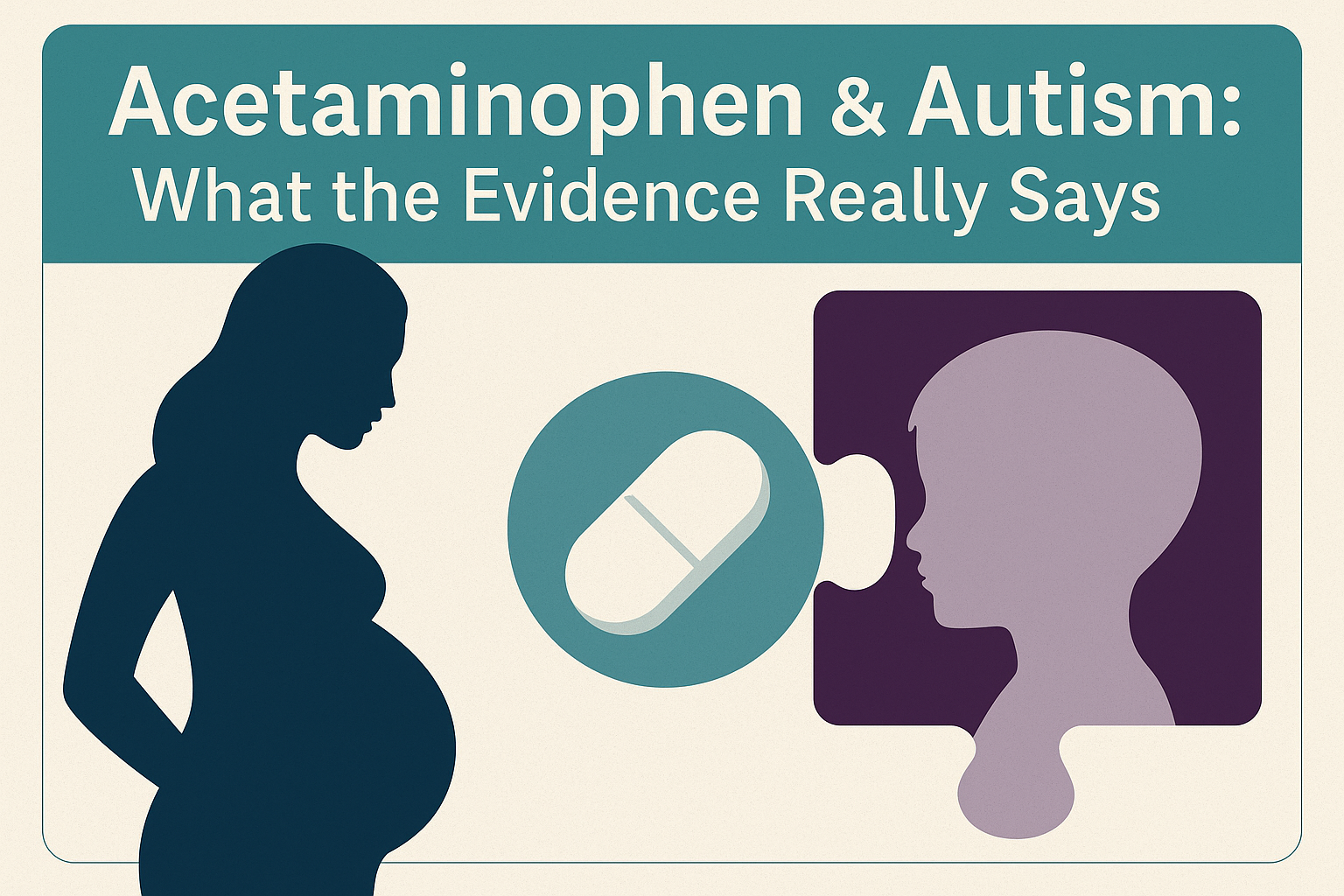

Explore emerging research on the possible link between acetaminophen (Tylenol) use in pregnancy and autism. Understand the evidence, limitations, and safe practices for expecting mothers in Nigeria and beyond.
Introduction
In Nigeria, as in many countries, health topics trending in Google often reflect public concern and media discourse. Recently, “autism” has seen increased search volume locally, and notably “acetaminophen” (or Tylenol) has emerged as a focal point within that trend. The question many are asking is: Is there a link between acetaminophen use (especially in pregnancy) and autism?
This topic matters because acetaminophen is one of the most commonly used over-the-counter medicines for pain and fever. When public conversation suggests a possible risk, it can provoke confusion among expecting mothers, caregivers, health professionals, and the general public.
In this article, we will:
- Review what autism is and its known risk factors
- Summarize the scientific evidence linking acetaminophen use (especially in pregnancy) to autism
- Discuss the strengths, limitations, and uncertainties of the research
- Provide guidance for safe acetaminophen use, especially in pregnancy, in the Nigerian context
- Suggest best practices for clinicians, mothers, and policy makers
- Offer a balanced conclusion grounded in current evidence
By the end, you should have a clearer, evidence-based understanding of whether acetaminophen is a genuine concern in autism risk — and what decisions and practices can be safer.
Autism Spectrum Disorder (ASD): A Primer
What Is Autism?
Autism Spectrum Disorder (ASD) is a neurodevelopmental condition characterized by:
- Difficulties in social communication and interaction
- Restricted, repetitive patterns of behavior, interests, or activities
- Symptoms usually appearing in early childhood, often before age three
ASD covers a wide spectrum — from individuals requiring substantial support to those who are highly independent. Its causes are multifactorial, with genetic predisposition playing a dominant role, but also environmental, perinatal, and lifestyle factors influencing expression and risk.
Known and Suspected Risk Factors
Some of the established or strongly suspected risk factors for autism include:

- Genetic Variants: Many genes have been implicated in ASD; twin and family studies show high heritability.
- Parental Age: Advanced paternal and maternal age is associated with increased risk.
- Perinatal Factors: Premature birth, low birth weight, maternal infections, preeclampsia, and intrauterine growth restriction.
- Epigenetic & Environmental Interactions: Exposures to pollutants, endocrine disruptors, or heavy metals may modulate gene expression.
- Maternal Metabolic Conditions: Obesity, diabetes, and hypertension in pregnancy may contribute to neurodevelopmental risk.
Importantly, no single cause accounts for most autisms; rather, a confluence of genetic and environmental influences shapes individual outcomes.
The Acetaminophen (Paracetamol / Tylenol) Hypothesis
Why Focus on Acetaminophen?
- Acetaminophen (called paracetamol in Nigeria) is ubiquitously used for pain and fever, including during pregnancy, because it is considered safer than alternatives like NSAIDs (e.g. ibuprofen) in many settings.
- Its wide use means even a small risk, if real, could have large public health consequences.
- Recent media coverage and policy statements (e.g., by U.S. FDA) have elevated public interest in whether acetaminophen use in pregnancy contributes to autism risk. (U.S. Food and Drug Administration)
- A systematic review by Mount Sinai researchers found that among 46 studies, higher-quality designs are more likely to show associations between prenatal acetaminophen and neurodevelopment disorders. (Mount Sinai Health System)
Thus, the hypothesis is: Prenatal or frequent acetaminophen exposure may modestly elevate risk of autism (or ADHD) in offspring.
Scientific Evidence: What Studies Show
Population / Cohort Studies
Many large-scale observational studies have explored this question.
- A Swedish nationwide cohort of 2.48 million children from 1995–2019 found that in models without sibling controls, ever-use of acetaminophen was associated with slight increased risks of autism (HR ~1.05) and ADHD. But in sibling-controlled analyses (i.e., comparing siblings exposed vs. unexposed), the associations disappeared (HR ≈ 0.98), suggesting confounding by familial factors. (JAMA Network)
- Several other cohort and case-control studies report small associations between maternal acetaminophen use and neurodevelopmental outcomes, but effect sizes are weak and inconsistent. (Yale School of Public Health)
- The Mount Sinai–led review of 46 studies applied the Navigation Guide methodology and concluded that “higher-quality studies are more likely to show a link,” but they also stressed that causality is not proven and residual confounding may still exist. (Mount Sinai Health System)
Systematic Reviews & Meta-analyses
- Some meta-analyses suggest a modest association, but caution that heterogeneity, bias, publication bias, and confounding limit interpretability.
- Critics note that many studies rely on self-reported acetaminophen use, dose/frequency uncertainty, lack of control for maternal fever, infection (which itself is a risk factor), and socioeconomic variables.
- A recent sibling comparison meta-analysis (Autism Speaks) found that observed associations in earlier meta-analyses largely disappeared when comparing siblings, indicating potential familial confounding. (Autism Speaks)
Biological Plausibility & Mechanisms
Some mechanistic hypotheses have been proposed:
- Oxidative Stress / Reactive Metabolites: Acetaminophen metabolizes to reactive intermediates that can deplete glutathione or induce oxidative stress, potentially affecting fetal brain development.
- Endocrine Disruption: Acetaminophen may disrupt hormonal pathways or thyroid function.
- Epigenetic Changes: It may influence methylation patterns or gene regulation in the developing brain.
- Neuroinflammation or Neurotoxicity: In theory, some metabolites might provoke subtle inflammation or neurotoxic effects across sensitive windows.
However, none of these have been unequivocally proven in human fetuses; animal or in vitro data remain preliminary.
Where the Evidence Is Strong — and Where It Isn’t
Strengths of the Data
- Large sample sizes: Many studies include tens or hundreds of thousands of participants.
- Longitudinal designs: Some studies follow children for years, capturing later diagnoses.
- Sibling-controlled analysis: This powerful method helps to account for shared genetics and home environment confounders.
- Systematic reviews: Meta-analyses and navigation-style reviews assess quality and aggregate evidence.
Key Limitations & Confounders
- Recall bias / measurement error: Maternal recall of acetaminophen use may be imprecise.
- Confounding by indication: Mothers take acetaminophen for pain, fever, or infection — factors (like infection or inflammation) may themselves elevate autism risk.
- Residual confounding: Unmeasured variables (e.g. maternal genetics, environmental exposures) may bias results.
- Dose and duration ambiguity: Many studies do not accurately capture how much, how often, or when (which trimester) acetaminophen was used.
- Lack of randomized trials: It is unethical to randomize pregnant women to different exposures.
- Cross-population generalizability: Many studies are done in European or North American populations, which differ genetically, environmentally, and in health systems relative to Nigeria or sub-Saharan Africa.
Official Stances of Medical Authorities
- The World Health Organization (WHO) states that there is currently no conclusive scientific evidence confirming a link between autism and acetaminophen use during pregnancy. (World Health Organization)
- The American College of Obstetricians and Gynecologists (ACOG) reaffirmed that acetaminophen is generally considered safe in pregnancy when used appropriately. (ACOG)
- In September 2025, the U.S. Food and Drug Administration (FDA) initiated a proposed label change to alert physicians and patients to possible neurological risks from acetaminophen use in pregnancy, though the evidence is still tentative and non-causal. (U.S. Food and Drug Administration)
- Specialist societies (e.g. Society for Maternal-Fetal Medicine) have urged caution about overinterpreting associative data and emphasize benefits vs risks. (SMFM)
Implications for Nigeria and Similar Settings
When interpreting international research in Nigeria, several contextual factors matter:
- Access to healthcare and disease burden: In many parts of Nigeria, high fevers (malaria, infections) are common. Untreated fevers during pregnancy pose significant risks to both mother and fetus.
- Medication regulation and quality: Generic acetaminophen/paracetamol is widely available and often used without prescription; misuse or overdosing risks exist.
- Nutritional status and comorbidities: Maternal malnutrition, anemia, infections like malaria or HIV, and environmental exposures (pollution, lead) might interact with any drug exposure.
- Genetic and environmental heterogeneity: Genetic polymorphisms in drug metabolism or detoxification enzymes, or local environmental exposures, might alter risk in ways not captured in foreign populations.
- Health literacy and communication: Misleading headlines may provoke fear or inappropriate cessation of needed therapy.
Thus, while it’s important to follow evidence, Nigerian clinicians and pregnant women must weigh the risks and benefits in local circumstances.
Best Practices & Recommendations Based on Current Evidence
Given the balance of current evidence, here’s a reasoned, cautious approach:
For Pregnant Women / Mothers-to-be

- Use acetaminophen only when necessary, not prophylactically.
- Use the lowest effective dose for the shortest duration possible. Avoid chronic or frequent use unless specifically advised.
- Prefer non-pharmacologic measures first: rest, hydration, cool compresses, treating underlying causes of fever or pain.
- Always consult a healthcare professional before using any medication during pregnancy.
- Avoid self-medication with multiple products containing acetaminophen, which can unknowingly raise total dose.
- Monitor fever/infection causes carefully: if you have ongoing infection/fever, manage medically under supervision, as those underlying causes themselves may pose neurodevelopmental risks.
For Clinicians & Health Workers
- Provide balanced counseling to pregnant women — avoid undue alarm but emphasize caution.
- Document indications, dose, timing of acetaminophen use in antenatal records to support future research.
- Consider alternative analgesic strategies (safe options under guidance) when appropriate.
- Monitor emerging research and guideline updates as the FDA review and global reviews evolve.
- Educate patients on risks of overdosing or combining medications that include acetaminophen.
For Policy Makers & Public Health Authorities
- Update drug labels and package inserts according to evolving evidence and local contexts.
- Promote public education campaigns that convey nuance — risk is uncertain, not proven.
- Support local epidemiological research in Nigeria or sub-Saharan Africa to explore acetaminophen-autism associations in African populations.
- Strengthen regulation of over-the-counter drug sales, ensuring quality and limiting unmonitored access.
- Coordinate surveillance systems capturing medication use in pregnancy and neurodevelopmental outcomes.
Addressing Common Concerns & Misconceptions
| Concern / Claim | What the Evidence Suggests | Notes & Caveats |
|---|---|---|
| “Acetaminophen causes autism” | Not proven. Evidence is associative, not causal. | Confounding factors likely contribute. |
| “Avoiding all acetaminophen is safer” | Not necessarily. Untreated fever or pain may harm the fetus. | Decisions must be individualized. |
| “Headlines say FDA issues warning” | True — the FDA is proposing label changes. (U.S. Food and Drug Administration) | These are precautionary, not definitive. |
| “Sibling studies show no risk” | Yes — sibling-controlled analyses tend to nullify the association. (JAMA Network) | Strong evidence of familial confounding. |
| “This is just Western research” | Mostly, yes — few studies are from Africa. | Local research gaps remain. |
Moving Forward: Research Needs & Future Directions
To clarify this debate, the scientific community needs:
- Prospective cohort studies in African populations, with accurate exposure measurement (dosage, frequency, trimester).
- Biomarker-based studies, e.g. measuring acetaminophen metabolites in blood/urine rather than relying solely on recall.
- Mechanistic studies in human-relevant models to test oxidative, epigenetic, endocrine pathways.
- Mendelian randomization or genetic instrumental variable studies that can mitigate confounding.
- Clinical guidelines and risk-benefit frameworks periodically updated with emerging data.
- Health system surveillance linking antenatal medication records with developmental outcomes in children.
Conclusion
The trending interest in acetaminophen and autism reflects a real public concern — one that must be addressed with clarity and evidence-based messaging.
Current data suggest there may be a modest association between maternal acetaminophen use and neurodevelopmental conditions like autism or ADHD, but no clear, consistent causal relationship has been established. Crucially, sibling-controlled analyses, which are among the strongest observational designs available, tend to negate the association — underscoring that many prior findings may be confounded by familial, genetic, or environmental factors. (JAMA Network)
Global health authorities like WHO and ACOG continue to uphold that acetaminophen, when used judiciously and under medical supervision, remains one of the safer analgesic and antipyretic options in pregnancy. (World Health Organization)
In Nigeria, with prevalent infectious disease burden and variable access to healthcare, decisions regarding acetaminophen use in pregnancy must weigh the risks of untreated fever or pain against uncertain associations. Mothers and clinicians should:
- Use acetaminophen only when needed, at the lowest effective dose and duration
- Favor non-drug alternatives where possible
- Avoid combining medications unknowingly
- Consult health professionals before taking any medication during pregnancy
- Support policies that monitor and regulate medicine use
In time, localized research and improved surveillance will help to clarify whether the acetaminophen-autism link is globally consistent or context-specific. Until then, prudent, evidence-grounded caution is the best path forward — neither alarmism nor blind assurance.