
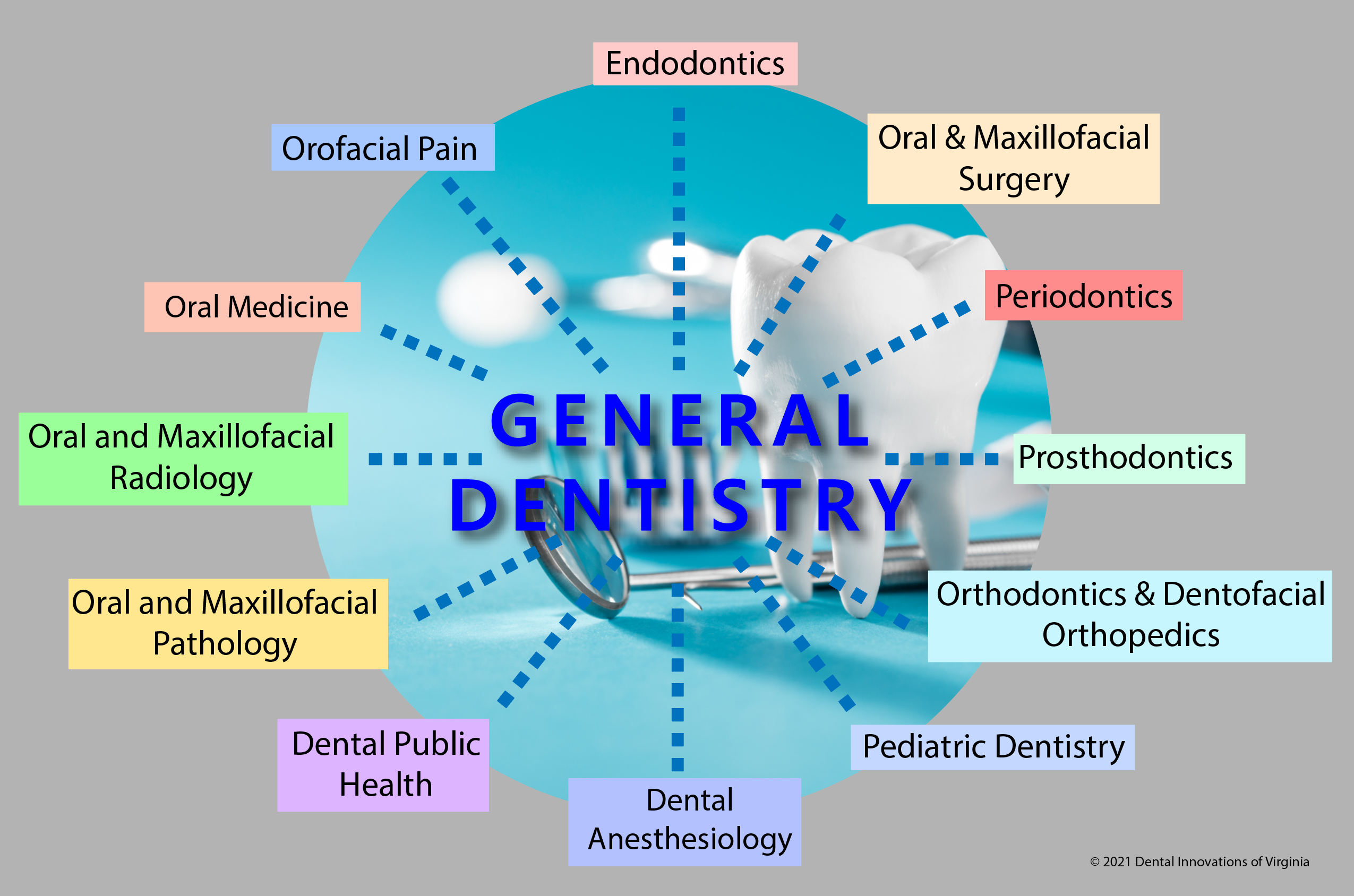

Discover the 10 dental specialties, from Endodontics to Oral Surgery. Learn what each expert does, when you need one, and how they collaborate for your best smile. Your complete guide to specialized dental care.
The Specialists Behind Your Smile: Navigating the World of Advanced Dental Care

When you think of a dentist, you likely picture your general family dentist who handles your check-ups and fillings. But just as in medicine, the field of dentistry has evolved into a network of highly focused specialties, each dedicated to solving specific, complex oral health problems. From saving a severely infected tooth to surgically reconstructing a jaw, or gently guiding a child’s dental development, these specialists possess advanced training that goes far beyond dental school. Understanding these specialties—why they exist, what they do, and when you might need one—empowers you to make informed decisions about your care and seek the right expert for your unique situation. This definitive guide demystifies the recognized dental specialties, helping you navigate the path to optimal oral health with confidence.
The Need for Specialization in Dentistry
Dentistry is a remarkably broad field encompassing everything from preventative education to complex facial surgery. A general dentist is an expert in primary care, managing overall oral health, diagnosing problems, and performing a wide array of treatments. However, certain conditions require a depth of knowledge and technical skill developed through additional years of rigorous, focused training.
Think of it like your general medical doctor referring you to a cardiologist for a heart condition or an orthopedist for a joint problem. Dental specialists provide that same level of targeted expertise. They have typically completed a multi-year residency program after dental school, immersing themselves in their specific area, mastering advanced procedures, and often conducting research. This specialized training ensures the best possible outcomes for patients with particular needs, whether it’s managing a complicated root canal, treating severe gum disease, or planning a full-mouth reconstruction.
A Guide to the Recognized Dental Specialties
Dental regulatory authorities recognize specific branches of dentistry as official specialties. As of 2024, the Canadian Dental Regulatory Authorities Federation (CDRAF) recognizes ten such specialties, a standard that is mirrored in many other countries. Here is a comprehensive look at what each specialist does.
1. Dental Public Health
This specialty takes a wide-angle view, focusing on the oral health of communities and populations rather than individual patients. Dental public health specialists are concerned with the diagnosis, prevention, and control of dental diseases through organized community efforts. They work behind the scenes in government agencies, health departments, and research institutions, developing policies, promoting community water fluoridation, and creating educational programs. Their work is foundational to improving overall oral health on a large scale.
2. Endodontics: The Tooth-Saving Specialists
When the soft inner tissue of your tooth (the pulp) becomes infected or inflamed due to deep decay, cracks, or trauma, you need an endodontist. This specialty is concerned with the biology, health, and diseases of the dental pulp and the tissues surrounding the root.
Endodontists are root canal experts. They perform complex root canal treatments, retreatments of previous root canals that have failed, and delicate microsurgery on the tips of tooth roots (apicoectomy). Using advanced technology like surgical microscopes and 3D imaging, they can navigate intricate root canal systems that a general dentist might find too challenging, making them the go-to professional for saving natural teeth that would otherwise need extraction.
3. Periodontics: Guardians of the Foundation
Your teeth are supported by a complex foundation of gums and bone. Periodontists are the specialists who diagnose, prevent, and treat diseases of these supporting tissues. They are experts in managing gingivitis and periodontitis (gum disease), which, if left untreated, can lead to bone loss and tooth loss.
Their work goes beyond non-surgical deep cleanings. Periodontists perform surgical procedures such as:
- Pocket reduction surgery to eliminate deep spaces where bacteria thrive.
- Regenerative procedures (bone and tissue grafts) to rebuild lost support.
- Crown lengthening to expose more tooth structure for a restoration.
- Dental implant placement and the management of peri-implantitis, a gum disease affecting implants.
4. Prosthodontics: Masters of Restoration and Replacement
If you have missing or severely damaged teeth, a prosthodontist is the architect of your smile’s reconstruction. This specialty is dedicated to the diagnosis, restoration, and replacement of teeth. Their goal is to restore oral function, comfort, appearance, and health through artificial substitutes.
Prosthodontists are experts in complex restorative cases. They design and oversee the creation of:
- Dentures (partial and full)
- Dental crowns and bridges
- Dental implants (often coordinating with oral surgeons or periodontists who place them)
- Veneers and complex aesthetic smile makeovers
They are particularly skilled in managing cases of worn-down teeth, congenital mouth defects, and full-mouth rehabilitations where a patient’s entire bite needs to be reconstructed.
5. Oral and Maxillofacial Surgery: The Surgical Experts
Oral and maxillofacial surgeons (OMS) are the surgical specialists of dentistry. Their scope is extensive, covering the diagnosis and surgical treatment of diseases, injuries, and defects of the hard and soft tissues of the entire mouth, face, and jaw region.
Common procedures include:
- Tooth extractions, particularly impacted wisdom teeth.
- Dental implant surgery and advanced bone grafting.
- Corrective jaw surgery (orthognathic surgery) to fix skeletal problems.
- Treatment of facial trauma (fractured jaws, facial bones).
- Biopsy and removal of cysts, tumors, and lesions of the oral cavity.
- Management of complex medical conditions affecting the mouth, such as oral ulcers or lichen planus.
6. Orthodontics and Dentofacial Orthopedics: Aligning Smiles and Jaws

Orthodontists are specialists in the alignment of teeth and jaws. They focus on the supervision, guidance, and correction of the growing or mature dentofacial structures. Their work corrects malocclusions (“bad bites”) such as overbites, underbites, crowding, and spacing.
Using appliances like braces, clear aligners (e.g., Invisalign), and retainers, they improve not only the smile’s appearance but also its function and long-term health. Orthodontists also work closely with other specialists, such as oral surgeons for jaw correction cases or prosthodontists to create ideal space for implants or bridges.
7. Pediatric Dentistry: Caring for Young Smiles
Pediatric dentists, or pedodontists, are the pediatricians of dentistry. They provide primary and comprehensive oral health care for infants, children, and adolescents, including those with special healthcare needs. They are trained to manage the unique behavioral, developmental, and clinical needs of children.
Their practice includes:
- Child-friendly exams, preventive care (fluoride, sealants), and treatment of decay.
- Management of dental trauma (e.g., knocked-out teeth).
- Early assessment and intervention for orthodontic problems.
- Guidance on habits like thumb-sucking and pacifier use.
- Use of behavior management techniques and sedation to ensure a positive experience for anxious young patients.
8. Oral Medicine and Oral Pathology
This specialty bridges dentistry and medicine. Specialists in oral medicine and pathology focus on the diagnosis and non-surgical management of complex medical conditions that manifest in the oral and maxillofacial region. They are experts in diagnosing:
- Oral mucosal diseases (e.g., lichen planus, recurrent ulcers, burning mouth syndrome).
- Salivary gland disorders.
- Orofacial pain conditions, including temporomandibular joint disorders (TMD).
- Oral manifestations of systemic diseases (e.g., diabetes, HIV, autoimmune disorders).
They also diagnose oral cancer and work closely with oncologists and surgeons in managing patients.
9. Oral and Maxillofacial Radiology
These specialists are the experts in dental imaging. They are concerned with the prescription, production, and interpretation of all types of diagnostic images used for diagnosing and managing diseases of the head and neck. This includes:
- Traditional X-rays
- Panoramic radiographs
- Cone-beam computed tomography (CBCT) scans
- Advanced imaging like MRI and CT as they relate to the oral region
Oral radiologists help other dentists and specialists by providing precise interpretations of complex images, which is crucial for accurate diagnosis and treatment planning, especially for implants, surgeries, and detecting hidden pathology.
10. Dental Anesthesia
The newest recognized specialty, dental anesthesia, is dedicated to providing pain and anxiety control for dental procedures. These specialists are experts in administering all levels of sedation and general anesthesia, allowing patients with severe dental phobia, extensive treatment needs, or special medical considerations to receive safe and comfortable care.
How to Know When You Need a Specialist
Your general dentist is your primary care coordinator and will typically refer you to a specialist when your condition requires their advanced skills. Common referral scenarios include:
- Persistent tooth pain or a complex tooth infection → Endodontist
- Bleeding, swollen, or receding gums; loose teeth → Periodontist
- Needing multiple teeth replaced or a full-mouth reconstruction → Prosthodontist
- Wisdom tooth pain or needing a dental implant with bone graft → Oral Surgeon
- Crooked teeth or a misaligned jaw → Orthodontist
- A sore in the mouth that won’t heal or chronic facial pain → Oral Medicine Specialist
It’s important to note that in many regions, you can also self-refer to a specialist if you feel your issue requires their expertise or if you desire a second opinion.
Table: Quick-Reference Guide to Dental Specialties
| Specialty | Focus Area | Common Procedures/Reasons for Referral |
|---|---|---|
| Endodontics | Dental pulp & root tissues | Complex root canals, tooth pain, retreatments |
| Periodontics | Gums & supporting bone | Gum disease treatment, implants, gum grafts |
| Prosthodontics | Tooth restoration/replacement | Crowns, bridges, dentures, full-mouth rehab |
| Oral Surgery | Surgical care of mouth/face/jaw | Extractions, implants, jaw surgery, pathology |
| Orthodontics | Teeth & jaw alignment | Braces, Invisalign, bite correction |
| Pediatric Dentistry | Children’s oral health | Child-specific care, behavior management, prevention |
The Collaborative Approach to Your Care
Modern dentistry thrives on collaboration. Your general dentist and specialists will often work together to create a seamless treatment plan for you. For example, a periodontist may place an implant, a prosthodontist designs and fits the crown on top, and your general dentist maintains it. This team-based approach ensures you receive the highest standard of care at every stage.
Embracing technological advancements, many of these specialists utilize tools like 3D imaging and digital smile design for precise planning, which you can learn more about in our article on the technological developments revolutionizing dentistry.
FAQs: Your Questions About Dental Specialists Answered
1. Does seeing a specialist cost more than seeing my general dentist?
Typically, yes. The fees reflect the additional years of training, specialized equipment, and the complexity of the procedures performed. However, the investment often leads to better long-term outcomes, potentially saving time, discomfort, and money by addressing problems correctly the first time.
2. How do I find a qualified specialist?
The best starting point is a referral from your trusted general dentist. You can also search the websites of national or regional dental associations (e.g., the American Dental Association or the Canadian Dental Association), which often have “Find a Specialist” directories. Always verify the specialist’s credentials and board certification status.
3. Can a general dentist perform procedures that are typically done by a specialist?
Yes, to varying degrees. General dentists are highly skilled and can perform many procedures, such as simple root canals, placing crowns, or straightforward tooth extractions. However, they will often refer a case to a specialist when it presents unusual complexity, a higher risk of complications, or requires advanced surgical skills. The decision is based on their training, experience, and what is in the patient’s best interest.
4. I have severe dental anxiety. Which specialist should I see?
This is an excellent example of when specialized care is crucial. You can discuss this with your general dentist first. They may refer you to a pediatric dentist (who is skilled in managing anxiety in all ages), an oral surgeon, or a practice that offers dental anesthesia services for sedation options. Furthermore, the mind-mouth connection is powerful, and addressing dental anxiety is a key part of overall wellness, as explored in our guide to mental health and dentistry.
5. What is the difference between a periodontist placing an implant and an oral surgeon placing one?
Both specialists are highly trained in implant surgery, and the lines can blur. Often, the choice depends on the specific needs of your case. A periodontist might be preferred if you have underlying gum disease or need simultaneous soft tissue grafting for aesthetics. An oral surgeon might be chosen for cases requiring more complex bone grafting or if the implant site is near critical anatomical structures like sinuses or nerves. Your general dentist or the specialists themselves can advise on the best choice for your situation.
Conclusion: Your Pathway to Specialized Care
The world of dental specialties exists to provide you with exceptional, focused care for every conceivable oral health need. From the preventative community focus of public health to the precise surgical hands of an oral surgeon, these experts dedicate their careers to mastering specific areas of dentistry. By understanding their roles, you become an active participant in your healthcare journey. Trust your general dentist as your guide, ask questions, and know that for any complex condition, there is a specialist with the advanced training to help you achieve and maintain a healthy, functional, and confident smile for life.