
Retatrutide is an investigational drug and is not yet approved by the FDA or any other major regulatory authority. Always consult your healthcare provider before making any changes to your health routine or starting new treatments.
Introduction

What if a single weekly injection could help you lose nearly a third of your body weight, more than most people lose with bariatric surgery, and without going under the knife? That’s the question researchers and patients are asking about retatrutide, a next-generation weight loss drug in late-stage clinical development that is already generating extraordinary results.
You’ve probably heard of semaglutide (Ozempic, Wegovy) and tirzepatide (Mounjaro, Zepbound), the GLP-1 medications that have reshaped how medicine thinks about obesity. Retatrutide goes one step further: it targets not two, but three hormonal pathways simultaneously, potentially delivering a level of weight loss that outpaces everything currently available. In the pivotal Phase 3 TRIUMPH-1 trial results published in May 2026, participants on the highest dose lost an average of 70.3 pounds (28.3% of body weight) over 80 weeks, and 45.3% of participants achieved 30% weight loss or more.
This post breaks down what retatrutide is, how it works, what the clinical trial results actually show, what side effects to expect, and what you should know before getting excited about when it might be available to the public. Let’s get into it.
What Is Retatrutide?
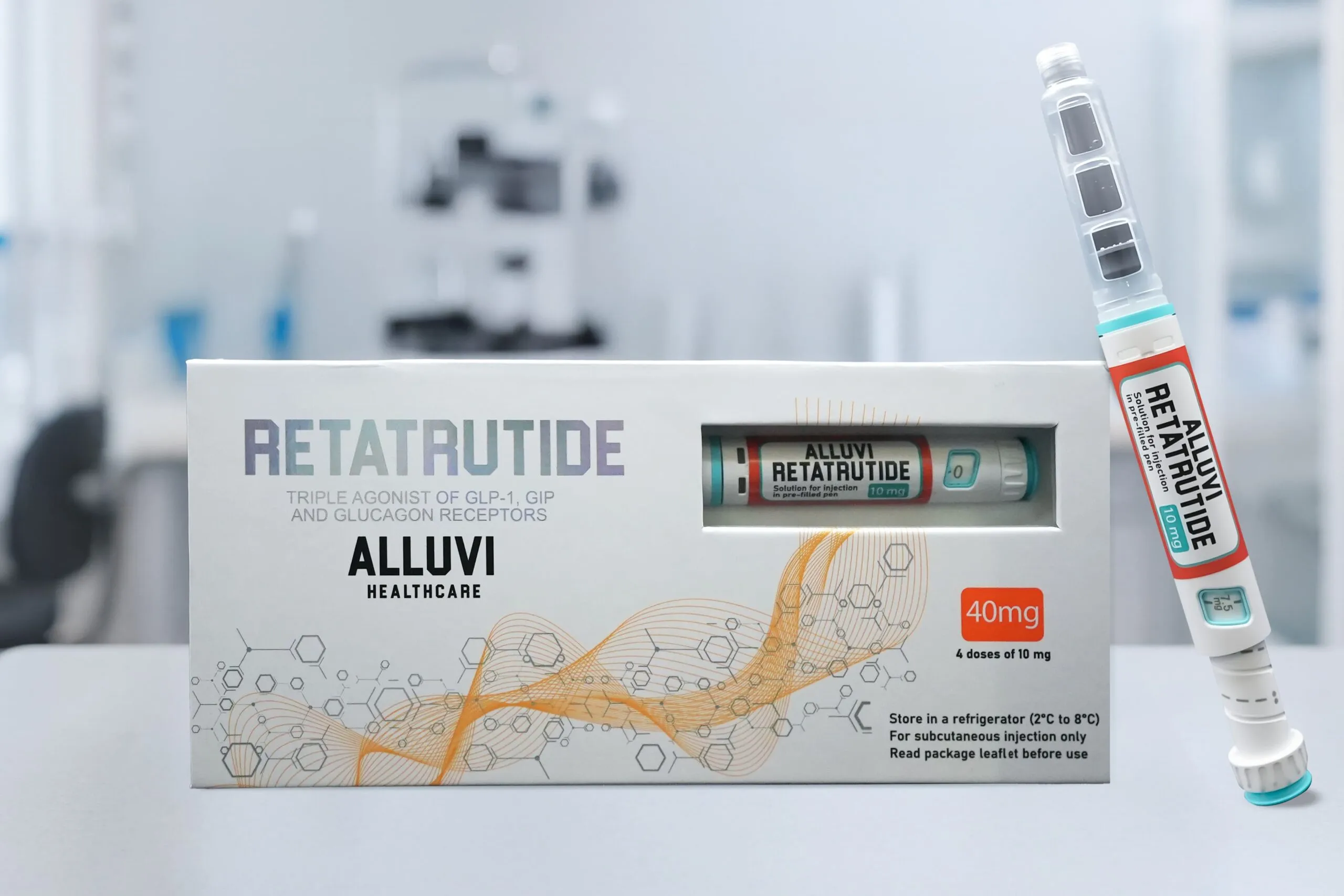
Retatrutide (development name LY3437943) is an investigational once-weekly injectable drug developed by Eli Lilly and Company, the same pharmaceutical company behind Zepbound (tirzepatide) and the new oral weight loss pill Foundayo (orforglipron).
What makes retatrutide unique is its classification as a triple hormone receptor agonist, meaning it simultaneously activates receptors for three gut hormones:
- GLP-1 (glucagon-like peptide-1), reduces appetite, slows gastric emptying, and improves blood sugar control. This is the same pathway targeted by semaglutide (Ozempic/Wegovy). See our explainer on how GLP-1 medications work for background.
- GIP (glucose-dependent insulinotropic polypeptide), enhances insulin secretion and may amplify GLP-1’s effects on fat metabolism. Tirzepatide (Zepbound) already targets both GLP-1 and GIP. See tirzepatide vs semaglutide: what’s the difference?
- Glucagon, a hormone that, counterintuitively, helps burn fat when activated alongside GLP-1. Adding glucagon agonism is the key differentiator that makes retatrutide a “triple-G” drug.
This triple mechanism is why researchers believe retatrutide can deliver meaningfully greater weight loss than its predecessors. Think of it as adding a third engine to a machine that already worked well with two.
Retatrutide is not yet approved by the FDA, the UK’s MHRA, or any other regulatory body. It remains investigational, with Phase 3 trials ongoing through 2026 and a regulatory filing expected in late 2026 or early 2027.
How Does the Triple Mechanism Actually Work?
To understand why hitting three hormonal targets matters, it helps to know a little about the biology of weight regulation. Your body doesn’t treat hunger and fat storage as one single system, it uses a complex network of hormones to manage energy intake, energy expenditure, blood sugar, and fat burning. The more of these levers a drug can pull simultaneously, the more powerful, and potentially the more lasting, the effect.
GLP-1: The Appetite Brake
GLP-1 is released by the gut after eating. It signals to the brain that you’re full, slows the rate at which food leaves the stomach (so you stay full longer), and stimulates insulin release in response to rising blood sugar. GLP-1 agonists like semaglutide have revolutionized obesity treatment by mimicking this effect.
GIP: The Amplifier

GIP is also released after eating and works in concert with GLP-1. In the context of GLP-1 agonism, activating GIP appears to amplify the weight loss signal and may reduce some of the gastrointestinal side effects associated with GLP-1-only drugs. This dual action is what gives tirzepatide its edge over semaglutide, and retatrutide builds on it.
Glucagon: The Fat Burner
Here’s where retatrutide diverges most significantly from what’s come before. Glucagon is best known as the hormone that raises blood sugar, the opposite of insulin. Historically, activating glucagon seemed counterproductive for a diabetes or weight loss drug. But research has shown that when glucagon is activated alongside GLP-1 (which counteracts its blood sugar-raising effect), it powerfully stimulates fat breakdown in the liver and increases overall energy expenditure. This is the metabolic trick at the heart of retatrutide’s design.
The result is a drug that suppresses appetite, improves blood sugar, and simultaneously accelerates fat burning, all from a single weekly injection.
What Do the Clinical Trials Actually Show?
Retatrutide has generated some of the most impressive weight loss numbers ever recorded in a pharmaceutical trial. Here’s where the evidence stands as of June 2026.
Phase 2: The Proof-of-Concept (2023)
The first major trial was published in the New England Journal of Medicine in 2023 (Jastreboff et al.). It enrolled 338 adults with obesity or overweight without diabetes and randomized them to receive weekly retatrutide at doses of 1 mg, 4 mg, 8 mg, or 12 mg, or placebo, for 48 weeks.
Results at 48 weeks were striking: participants on the 12 mg dose lost an average of 24.2% of their body weight. For context, tirzepatide, the most effective previously approved weight loss drug, showed approximately 21% weight loss at 72 weeks in its pivotal SURMOUNT-1 trial, a longer time period. These results established retatrutide as a legitimate next-generation candidate and sparked enormous interest.
Phase 3, TRIUMPH-4: Obesity + Osteoarthritis (December 2025)
In December 2025, Eli Lilly announced positive Phase 3 results from TRIUMPH-4, which studied retatrutide in adults with obesity and knee osteoarthritis, a combination that represents a huge unmet need, since obesity is both a cause and an aggravator of joint disease.
Participants on the 12 mg dose lost an average of 28.7% of their body weight at 68 weeks (approximately 71.2 pounds) and also experienced substantial reductions in knee pain scores. This was the first Phase 3 trial to report, and it set a high bar.
Phase 3, TRIUMPH-1: Pivotal Obesity Trial (May 2026)
The most significant results came in May 2026 from TRIUMPH-1, the core pivotal obesity trial. This enrolled 2,339 adults with obesity or overweight (and at least one weight-related health condition, but without diabetes) and followed them for 80 weeks.
Key findings at 80 weeks on the 12 mg dose:
- Average weight loss: 70.3 lbs (28.3% of body weight)
- 45.3% of participants achieved ≥30% weight loss, a threshold previously considered the domain of bariatric surgery
- At 4 mg: 17.6% weight loss
- At 9 mg: 23.7% weight loss
- All three doses met primary and key secondary endpoints
- Significant improvements in cardiometabolic markers (waist circumference, blood pressure, cholesterol) were observed
Lead investigator Professor Ania Jastreboff of Yale School of Medicine noted “clear improvements in assessed cardiometabolic health measures” across all dose groups.
Phase 3, TRANSCEND-T2D-1: Type 2 Diabetes (March 2026)
In March 2026, Eli Lilly also reported positive results from the first Phase 3 diabetes trial. Retatrutide met all primary and key secondary endpoints, delivering superior A1C (blood sugar) reduction and weight loss at 40 weeks versus placebo in adults with type 2 diabetes. Importantly, no weight loss plateau was observed at 40 weeks, suggesting the drug’s effects may continue beyond what was seen in the trial window. See our post on managing type 2 diabetes with GLP-1 medications for related context.
Trials Still in Progress
Seven additional Phase 3 trials in the TRIUMPH and TRANSCEND programs are ongoing as of mid-2026, investigating retatrutide in sleep apnea, chronic low back pain, cardiovascular outcomes, kidney disease, and liver disease (metabolic dysfunction-associated steatotic liver disease, or MASLD). Results are expected through 2026 and 2027.
Side Effects: What to Expect
No drug this effective comes without trade-offs. Here’s what the clinical data reveals about retatrutide’s side effect profile so far.
Gastrointestinal Side Effects (Most Common)
The most frequently reported side effects are gastrointestinal, the same pattern seen with semaglutide and tirzepatide:
- Nausea, affected up to 60% of participants on the 12 mg dose in Phase 2 trials, though most cases were mild to moderate
- Diarrhea
- Vomiting
- Constipation
- Abdominal discomfort
These effects are most pronounced during the dose-escalation phase (when doses are gradually increased over weeks to months) and typically diminish once a stable dose is reached. In Phase 3 trials, most participants continued treatment despite these effects, suggesting they were manageable for the majority.
Dysesthesia: A Unique Finding
One side effect that distinguishes retatrutide from its predecessors is dysesthesia, an altered or tingling skin sensation. This was reported in roughly 20% of participants at higher doses in Phase 2, though it was generally mild. This signal is being actively monitored in Phase 3 trials, and further characterization is expected as more data matures.
Gallbladder Effects
Gallbladder-related events, including gallstones, are a known class effect of GLP-1 receptor agonists and have been observed with retatrutide as well. Rapid weight loss itself increases gallstone risk, which complicates attributing this solely to the drug.
Serious Adverse Events
The rate of serious adverse events in trials has been 4% in both the retatrutide and placebo groups, indicating that while side effects are more frequent with the drug, serious events are not more common than in untreated participants. No trial-related deaths have been reported, and liver and kidney function tests have not shown consistent concerning patterns in Phase 2 data.
What We Don’t Yet Know
It’s important to be upfront about the limitations of current data:
- Long-term safety beyond 80 weeks has not yet been fully characterized
- Cardiovascular outcomes data from the dedicated TRIUMPH-Outcomes trial won’t be available until 2027–2028
- Full contraindication profiles, drug interactions, and safety in pregnancy or severe organ impairment will only be finalized upon regulatory approval
- Muscle mass preservation during weight loss, a question relevant to all potent obesity drugs, is still under investigation
How Does Retatrutide Compare to Existing Options?
It’s natural to want to know how retatrutide stacks up against what’s already available, semaglutide (Wegovy) and tirzepatide (Zepbound). Here’s an honest summary of what the data suggests, with important caveats.
| Drug | Mechanism | Peak Weight Loss (Pivotal Trial) | Trial Duration |
| Semaglutide (Wegovy) | GLP-1 agonist | ~17% | 68 weeks (STEP-1) |
| Tirzepatide (Zepbound) | GLP-1 + GIP | ~21% | 72 weeks (SURMOUNT-1) |
| Retatrutide | GLP-1 + GIP + Glucagon | ~28.3% | 80 weeks (TRIUMPH-1) |
Critical caveat: These are different trials with different patient populations, inclusion criteria, dose escalation protocols, and durations. They cannot be directly compared. No head-to-head trial between retatrutide and tirzepatide has been conducted. The apparent superiority of retatrutide over existing options needs to be confirmed in a properly designed comparative study before conclusions can be drawn.
What can be said with confidence is that retatrutide’s Phase 3 results are historically impressive within the obesity pharmacology field, and the proportion of participants achieving 30%+ weight loss represents a meaningful threshold.
When Will Retatrutide Be Available?
This is the question most readers will want answered, and the honest answer requires managing expectations carefully.
As of June 2026, retatrutide remains an investigational drug, it is not approved anywhere in the world and is not available outside of clinical trials.
The projected timeline:
- Late 2026 / Early 2027: Eli Lilly expected to submit a New Drug Application (NDA) to the FDA after remaining Phase 3 trials complete and data packages are assembled
- 2027 (estimated): FDA review and potential approval, assuming a standard 10–12 month review period and no significant safety signals emerging from ongoing trials
- Post-approval: Pricing, insurance coverage, and access will be major factors. Given that tirzepatide (Zepbound) faced significant access hurdles at launch, retatrutide, likely positioned as a premium next-generation therapy, will face similar or greater challenges.
Anyone claiming to offer retatrutide for sale or prescription right now is not operating within approved medical channels. Be cautious of online sources or “clinics” selling access to unapproved drugs.
Who Might Eventually Be a Candidate for Retatrutide?
Based on the trial populations studied so far, retatrutide appears most relevant for:
- Adults with obesity (BMI ≥30) or overweight (BMI ≥27) with at least one weight-related health condition
- Adults with type 2 diabetes who need both better blood sugar control and meaningful weight loss
- People with obesity and osteoarthritis, given the dramatic TRIUMPH-4 results showing both weight and pain reduction
- Potentially, people with metabolic liver disease (MASLD), sleep apnea, or chronic low back pain, pending ongoing trial results
People with a personal or family history of medullary thyroid cancer or multiple endocrine neoplasia syndrome type 2 (MEN2) are likely to be excluded, as is the case with all GLP-1-based drugs. Full prescribing restrictions will only be finalized upon regulatory approval.
For those currently dealing with obesity or metabolic disease, speaking with your doctor about existing approved options, tirzepatide or semaglutide, is the most practical near-term step.
Key Takeaways
- Retatrutide is a once-weekly injectable drug that activates three hormonal pathways (GLP-1, GIP, and glucagon) simultaneously, making it a true “triple agonist” and the most powerful weight loss drug in clinical development.
- The pivotal TRIUMPH-1 Phase 3 trial (May 2026) showed average weight loss of 28.3% (70.3 lbs) at 80 weeks at the 12 mg dose, with 45.3% of participants achieving ≥30% weight loss.
- Side effects are primarily gastrointestinal (nausea, diarrhea, vomiting), most pronounced during dose escalation, and manageable for most participants. A unique side effect, dysesthesia (skin tingling), is being monitored.
- Retatrutide is not yet FDA-approved and is not available outside of clinical trials. Regulatory submission is expected in late 2026 or early 2027, with potential approval in 2027.
- Long-term safety data (beyond 80 weeks) and cardiovascular outcomes data are still pending, important gaps that will be filled as the broader TRIUMPH program concludes.
Closing: The Most Exciting Drug in Obesity Medicine, But Not Yet in Your Doctor’s Office
Retatrutide is, without question, the most closely watched drug in the obesity and metabolic medicine space right now. The clinical trial results are extraordinary, producing weight loss numbers that were once associated only with surgery, through a weekly injection. If the safety profile continues to hold up across the full TRIUMPH program, it could genuinely change the standard of care for obesity and type 2 diabetes within the next few years.
But “could” and “will” are different things, and 2027 is not today. If you’re living with obesity or metabolic disease right now, don’t put your health on hold waiting for a future drug. Effective, approved options already exist, and the right conversation with your doctor is the most powerful first step available to you. When retatrutide does arrive, it will be a welcome addition to an already improving landscape. Stay informed, stay in communication with your healthcare team, and bookmark ChiidHealth.com for updates as the TRIUMPH results continue to roll in through 2026 and beyond.