

Discover the science behind heat shock proteins and how sauna therapy and cold exposure can improve cardiovascular health, longevity, and brain function. Evidence-based guide with practical protocols.
Introduction
From ancient Finnish saunas to modern cryotherapy chambers, the therapeutic use of temperature extremes has captivated human cultures for millennia. Today, cutting-edge research is unveiling the remarkable biological mechanisms behind these practices, particularly the role of heat shock proteins (HSPs) in promoting health, longevity, and resilience.
This evidence-based exploration examines how controlled exposure to heat and cold triggers profound cellular adaptations that may enhance everything from cardiovascular health to cognitive function. Whether you’re a biohacker seeking optimization or simply curious about the science behind wellness trends, understanding heat shock proteins could revolutionize your approach to health.
What Are Heat Shock Proteins?
Heat shock proteins are a family of highly conserved molecular chaperones that exist in virtually every living organism, from bacteria to humans. First discovered in the 1960s by Italian geneticist Ferruccio Ritossa, these proteins earned their name because they were initially observed to increase dramatically when cells were exposed to elevated temperatures.
The Cellular Guardians
Think of HSPs as your body’s molecular maintenance crew. When cells face stress—whether from heat, cold, toxins, or oxidative damage—these proteins spring into action to:
- Refold damaged proteins back to their functional shape
- Prevent protein aggregation that can lead to cellular dysfunction
- Transport proteins to appropriate cellular locations
- Assist in protein degradation when repair isn’t possible
- Stabilize cellular structures during stress
Major HSP Families

The heat shock protein family is classified by molecular weight:
HSP70 (70 kDa): The most abundant and well-studied family, crucial for protein folding and cellular protection
HSP90 (90 kDa): Essential for protein maturation and cellular signaling
HSP60: Primarily found in mitochondria, vital for mitochondrial protein folding
Small HSPs (15-30 kDa): Including HSP27, important for cytoskeletal stabilization
HSP100: Involved in protein disaggregation and degradation
The Science of Sauna Therapy
Historical Context and Modern Usage
Sauna bathing, originating in Finland over 2,000 years ago, has evolved from a cultural ritual to a scientifically-backed health intervention. Traditional Finnish saunas operate at temperatures between 70-100°C (158-212°F) with low humidity (10-20%), while infrared saunas use radiant heat at lower temperatures (45-60°C or 113-140°F).
Physiological Responses to Heat Exposure
When you enter a sauna, your body undergoes a cascade of adaptive responses:
Immediate Response (0-5 minutes):
- Core body temperature rises by 1-3°C
- Heart rate increases by 30-50%
- Cardiac output increases similar to moderate exercise
- Vasodilation occurs in peripheral blood vessels
Sustained Response (5-20 minutes):
- Profuse sweating begins (up to 1-2 liters per hour)
- Heat shock protein synthesis dramatically increases
- Stress hormone levels temporarily rise then normalize
- Blood flow to skin increases up to 10-fold
Heat Shock Protein Activation
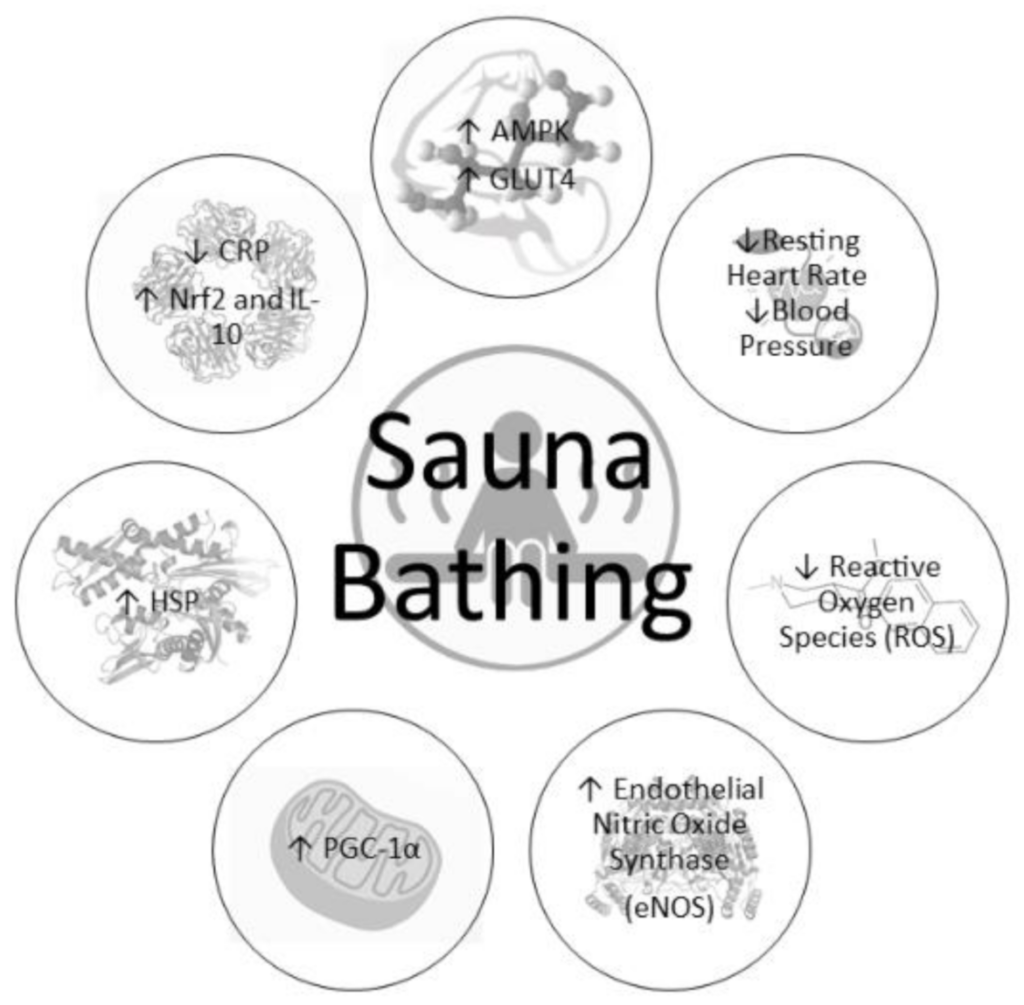
The magic happens at the cellular level. Heat stress triggers the heat shock response (HSR), a highly conserved cellular defense mechanism. When cellular proteins begin to unfold due to elevated temperatures, heat shock factor 1 (HSF1) rapidly translocates to the nucleus and activates HSP gene transcription.
Research shows that sauna sessions can increase HSP70 levels by 50-100% within hours of exposure, with effects lasting 24-48 hours. This upregulation provides enhanced cellular protection against future stressors—a phenomenon known as hormesis.
Evidence-Based Health Benefits
Cardiovascular Health
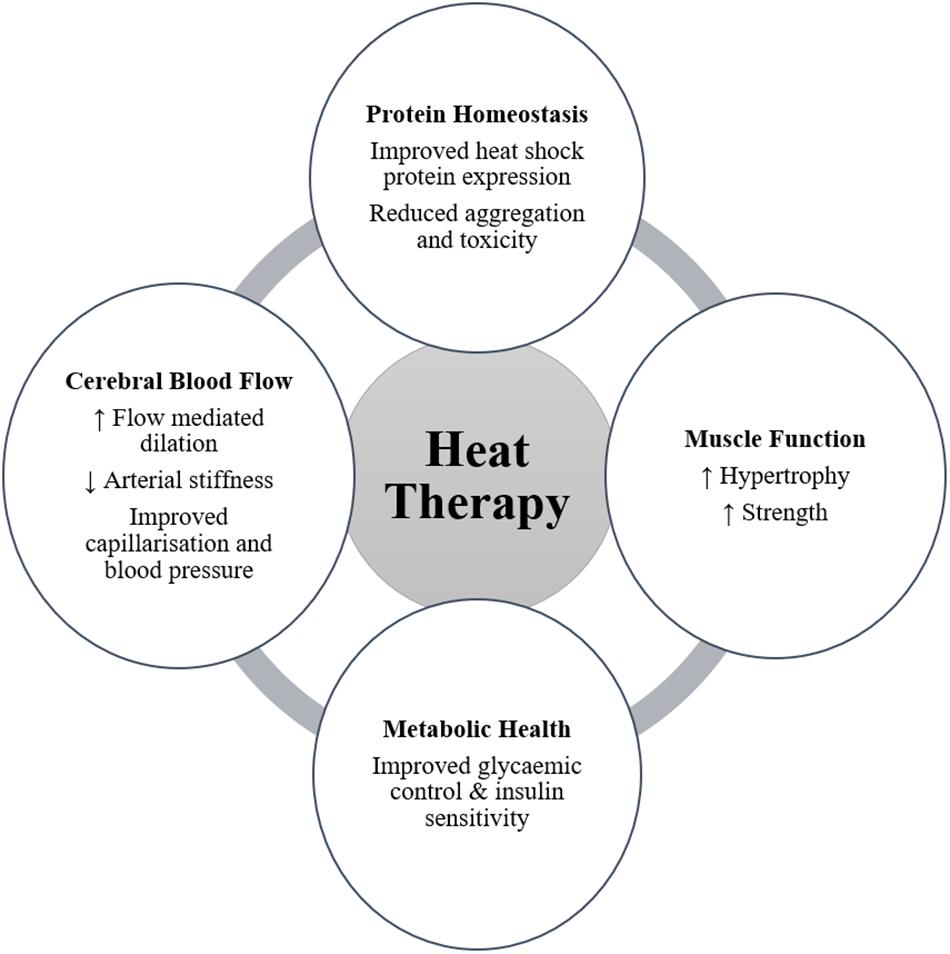
The most robust evidence for sauna benefits comes from cardiovascular research. The landmark Finnish studies, following over 2,300 men for decades, revealed remarkable findings:
- 4-7 sauna sessions per week reduced cardiovascular mortality by 50%
- Risk of sudden cardiac death decreased by 63%
- Stroke risk reduced by 61%
- Hypertension risk decreased by 46%
The mechanisms include improved endothelial function, reduced arterial stiffness, and enhanced nitric oxide production.
Longevity and All-Cause Mortality
The same Finnish cohort studies demonstrated that frequent sauna use (4-7 times per week) was associated with a 40% reduction in all-cause mortality compared to once-weekly use. This effect remained significant after adjusting for age, physical activity, and socioeconomic status.
Brain Health and Cognitive Function
Emerging research suggests sauna use may protect against neurodegenerative diseases:
- 65% reduction in Alzheimer’s disease risk with frequent sauna use
- Improved cognitive performance in memory tasks
- Enhanced production of brain-derived neurotrophic factor (BDNF)
- Increased heat shock protein expression in brain tissue
Metabolic Benefits
Regular sauna use appears to improve metabolic health through several mechanisms:
- Enhanced insulin sensitivity
- Improved glucose tolerance
- Increased growth hormone release
- Elevated levels of heat shock proteins that protect metabolic tissues
The Cold Therapy Revolution
Types of Cold Exposure
Cold therapy encompasses various modalities, each with distinct physiological effects:
Cold Water Immersion (CWI): Submersion in water at 10-15°C (50-59°F) for 10-20 minutes
Cryotherapy: Exposure to extremely cold air (-100 to -140°C) for 2-4 minutes
Cold Showers: Daily exposure to cold water (10-18°C) for 30 seconds to 5 minutes
Ice Baths: Immersion in ice water (0-4°C) for 5-15 minutes
Physiological Adaptations to Cold
Cold exposure triggers a complex array of physiological responses designed to maintain core body temperature and cellular function:
Immediate Response:
- Vasoconstriction to preserve core heat
- Increased metabolic rate
- Activation of the sympathetic nervous system
- Release of norepinephrine and epinephrine
Adaptive Response:
- Enhanced brown adipose tissue activity
- Improved cold-induced thermogenesis
- Increased mitochondrial biogenesis
- Elevated heat shock protein production
Cold-Induced Heat Shock Proteins
Paradoxically, cold exposure also stimulates heat shock protein production. This seemingly contradictory response occurs because HSPs are activated not just by heat, but by any cellular stress that threatens protein integrity. Cold shock proteins (CSPs) and HSPs work synergistically to maintain cellular homeostasis during temperature stress.
Studies show that cold water immersion can increase HSP70 expression by 200-300%, with sustained elevation for 24-72 hours post-exposure.
Scientific Benefits of Cold Therapy
Metabolic Enhancement
Cold exposure activates brown adipose tissue (BAT), specialized fat tissue that burns calories to generate heat:
- 10-15% increase in metabolic rate during cold exposure
- Enhanced mitochondrial function and biogenesis
- Improved glucose uptake and insulin sensitivity
- Increased production of uncoupling protein 1 (UCP1)
Immune System Strengthening
Regular cold exposure appears to bolster immune function:
- 29% reduction in sick days among cold shower practitioners
- Increased white blood cell count and activity
- Enhanced production of anti-inflammatory cytokines
- Improved stress resilience through hormetic adaptation
Mental Health and Cognitive Benefits
Cold therapy demonstrates significant neurological benefits:
- Increased norepinephrine levels (up to 530% increase)
- Enhanced mood and reduced depression symptoms
- Improved stress tolerance and mental resilience
- Increased production of neurotrophic factors
Recovery and Performance
Athletes increasingly use cold therapy for recovery and performance enhancement:
- Reduced exercise-induced inflammation
- Faster recovery between training sessions
- Decreased delayed onset muscle soreness (DOMS)
- Enhanced adaptation to training stress
The Contrast Therapy Advantage
Synergistic Effects of Heat and Cold
The combination of heat and cold exposure—known as contrast therapy—may provide synergistic benefits that exceed either modality alone. This approach has been used in Scandinavian cultures for centuries, alternating between sauna sessions and cold plunges.
Mechanisms of Action:
- Enhanced vascular training through vasodilation and vasoconstriction
- Maximized heat shock protein production
- Improved cardiovascular adaptations
- Enhanced recovery and adaptation responses
Optimal Protocols: Research suggests the following evidence-based approaches:
Traditional Contrast: 15-20 minutes sauna (70-90°C) followed by 30 seconds to 2 minutes cold water (10-15°C), repeated 3-4 cycles
Modified Contrast: 10-15 minutes infrared sauna followed by 1-3 minutes cold shower, daily or every other day
Research on Contrast Therapy
Limited but promising research on contrast therapy shows:
- Greater improvements in cardiovascular function compared to heat or cold alone
- Enhanced recovery markers in athletes
- Improved autonomic nervous system balance
- Superior stress adaptation responses
Practical Implementation Guidelines
Getting Started with Sauna Therapy
Beginner Protocol:
- Start with 10-15 minutes at lower temperatures (60-70°C)
- Gradually increase duration and temperature over 2-4 weeks
- Aim for 2-3 sessions per week initially
- Always stay hydrated and exit if feeling unwell
Advanced Protocol:
- 15-25 minutes at 70-90°C
- 4-7 sessions per week for maximum benefits
- Include brief cool-down periods between sessions
- Consider contrast therapy integration
Cold Exposure Implementation
Cold Shower Method:
- Begin with 30 seconds of cold water at the end of regular shower
- Gradually increase to 2-3 minutes over 2-3 weeks
- Progress to starting shower with cold water
- Maintain controlled breathing throughout
Cold Water Immersion:
- Start with 1-2 minutes in 15°C water
- Progress to 10-15 minutes in 10-15°C water
- Always have supervision for safety
- Build tolerance gradually over weeks
Safety Considerations
Contraindications for Heat Therapy:
- Unstable angina or recent myocardial infarction
- Severe aortic stenosis
- Pregnancy (consult physician)
- Certain medications affecting thermoregulation
Contraindications for Cold Therapy:
- Raynaud’s phenomenon or cold urticaria
- Cardiovascular disease (consult physician)
- Open wounds or infections
- Pregnancy (first trimester)
General Safety Guidelines:
- Start gradually and progress slowly
- Stay hydrated during heat exposure
- Never exceed personal tolerance limits
- Consult healthcare providers if you have medical conditions
- Always prioritize safety over intensity
The Future of Temperature Therapy
Emerging Research Directions
Current research is exploring several fascinating areas:
Personalized Protocols: Genetic variations in heat shock protein responses may inform individualized temperature therapy prescriptions
Longevity Applications: Investigation into HSPs’ role in cellular aging and potential anti-aging interventions
Disease Prevention: Specific protocols for preventing neurodegenerative diseases, cardiovascular conditions, and metabolic disorders
Athletic Performance: Optimizing temperature therapy timing and intensity for peak performance adaptations
Technology Integration
Modern technology is enhancing traditional practices:
Smart Saunas: Temperature and humidity control with biometric monitoring
Wearable Integration: Real-time physiological monitoring during temperature exposure
Cryotherapy Advances: Precise temperature control and targeted cooling applications
Data Analytics: Personalized recommendations based on individual response patterns
Conclusion: Embracing the Science of Temperature
The ancient wisdom of using temperature extremes for health is now validated by rigorous scientific research. Heat shock proteins serve as the molecular foundation for the remarkable benefits observed with sauna and cold therapy, from enhanced cardiovascular health to improved longevity and cognitive function.
The evidence is clear: regular, controlled exposure to heat and cold stress triggers powerful adaptive mechanisms that enhance human health and resilience. Whether through traditional saunas, cold water immersion, or modern cryotherapy, these interventions offer accessible, evidence-based approaches to optimization.
As we continue to unravel the complex biology of heat shock proteins and temperature adaptation, one thing remains certain: the strategic use of thermal stress represents one of the most powerful and accessible tools for enhancing human health and performance.
Start slowly, progress gradually, and always prioritize safety. Your cellular maintenance crew—those remarkable heat shock proteins—will thank you for the challenge.