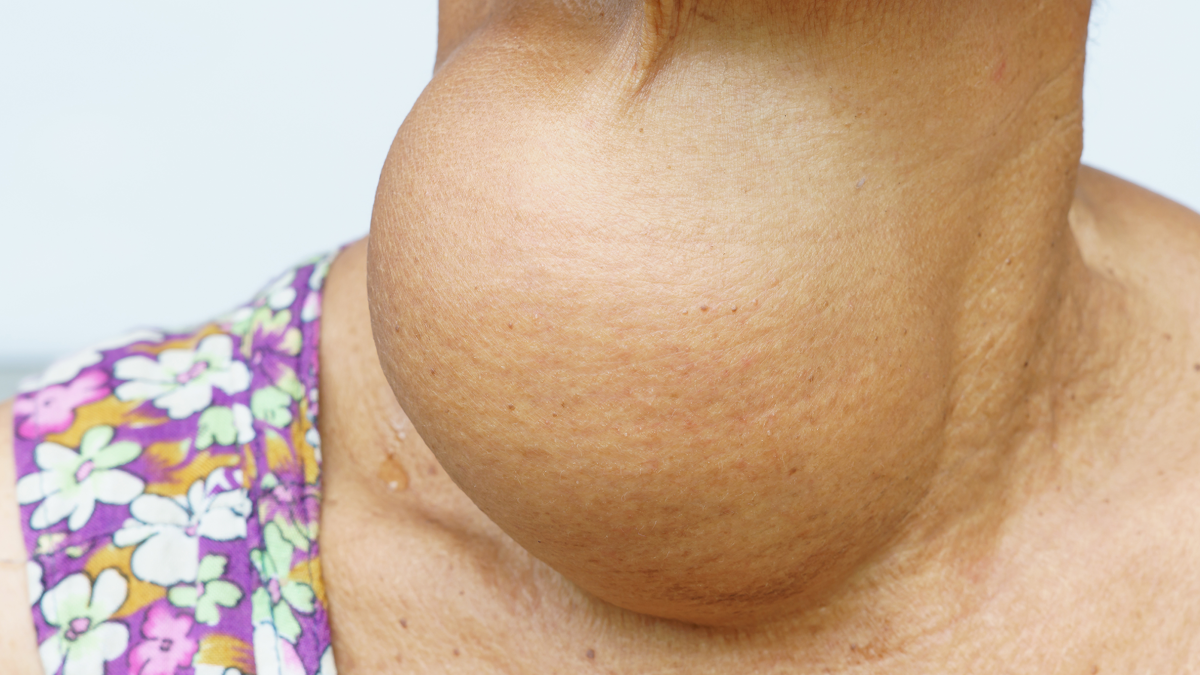

Have you ever noticed a visible swelling at the base of someone’s neck and wondered what it was? That enlargement could be a goiter
Introduction
Have you ever noticed a visible swelling at the base of someone’s neck and wondered what it was? That enlargement could be a goiter; a condition affecting the thyroid gland that is far more common than most people realize. According to the World Health Organization (WHO), iodine deficiency, one of the leading causes of goiter, affects approximately 2 billion people globally, making thyroid disorders a significant worldwide health concern.
A goiter isn’t a disease in itself. Rather, it’s a sign that something is affecting your thyroid; a small, butterfly-shaped gland in your neck that controls metabolism, heart rate, energy levels, and much more. Understanding what causes a goiter, what symptoms to watch for, and when to seek medical attention can make a meaningful difference in your health outcomes.
In this post, we’ll walk you through everything you need to know about goiter: the types, causes, symptoms, diagnosis, treatment options, and when it’s time to call your doctor.
What Is a Goiter?
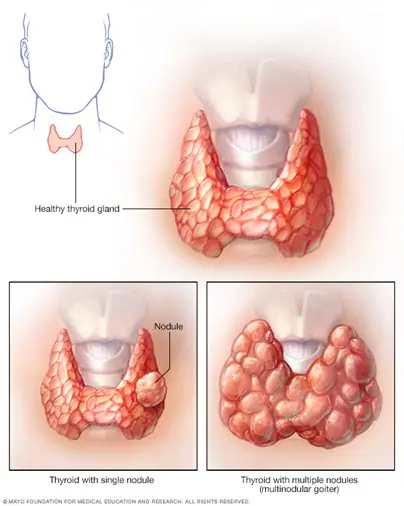
A goiter (also spelled “goitre” in British English) is an abnormal enlargement of the thyroid gland. The thyroid sits at the front of your neck, just below your Adam’s apple. In a healthy adult, it weighs between 20 and 30 grams and is barely noticeable. When the gland swells, it can become visibly prominent, and in some cases, large enough to cause difficulty swallowing or breathing.
There are two primary structural types of goiter:
- Diffuse goiter: The entire thyroid gland is uniformly enlarged.
- Nodular goiter: The gland develops one or more lumps (nodules). If there’s just one nodule, it’s called a uninodular goiter; multiple nodules make it a multinodular goiter.
Importantly, goiter can occur with normal thyroid hormone levels (euthyroid), overactive thyroid function (hyperthyroidism), or underactive thyroid function (hypothyroidism). So the presence of a goiter doesn’t automatically tell you how well your thyroid is working, that requires testing.
What Causes a Goiter?
Goiter has several possible causes, and identifying the right one is essential for choosing the appropriate treatment.
Iodine Deficiency
The most common cause worldwide is iodine deficiency. Your thyroid needs iodine to produce thyroid hormones. When iodine intake is too low, the gland overworks to compensate, eventually enlarging. This type of goiter is most prevalent in regions far from the ocean and in areas where iodized salt is not widely available.
According to the WHO, iodine deficiency remains a major public health issue in parts of Africa, South Asia, and Eastern Europe. Iodization programs (adding iodine to table salt) have dramatically reduced the prevalence in many countries.
Autoimmune Conditions
Two major autoimmune thyroid diseases can cause goiter:
- Graves’ disease: The immune system attacks the thyroid and stimulates it to overproduce hormones, causing hyperthyroidism and diffuse goiter.
- Hashimoto’s thyroiditis: The immune system damages the thyroid, leading to hypothyroidism. The resulting inflammation often causes a goiter.
Thyroid Nodules
Benign cysts or nodules can develop in the thyroid tissue, causing the gland to enlarge unevenly. A 2022 review published in Frontiers in Endocrinology noted that thyroid nodules are found in up to 65% of adults when examined with ultrasound, though the vast majority are benign and require no intervention.
Thyroid Cancer
Goiter can, in rare cases, be caused by thyroid cancer. While thyroid cancer accounts for only a small percentage of all goiter cases, any rapidly growing or unusually hard goiter warrants prompt medical evaluation.
Other Causes
- Pregnancy: the hormone human chorionic gonadotropin (hCG) can mildly stimulate the thyroid
- Certain medications (e.g., lithium, amiodarone)
- Inflammation of the thyroid (thyroiditis)
- Consuming large amounts of goitrogenic foods (foods that interfere with iodine uptake), such as raw cruciferous vegetables in very high quantities, though this is rarely a standalone cause in otherwise healthy individuals
Signs and Symptoms of Goiter
The most obvious symptom is a visible or palpable swelling at the base of the neck. However, the range of symptoms you experience depends on the size of the goiter and whether it’s affecting thyroid hormone levels.
Symptoms Related to the Goiter Itself
- A visible lump or fullness at the front of the neck
- A tight feeling in the throat
- Difficulty swallowing (dysphagia), especially with large goiters
- Difficulty breathing, particularly when lying down
- A persistent cough or hoarseness
Symptoms of Hyperthyroidism (Overactive Thyroid)
If the goiter is associated with too much thyroid hormone production, you might experience:
- Unexplained weight loss
- Rapid or irregular heartbeat
- Anxiety, nervousness, or irritability
- Sweating and heat intolerance
- Tremors in the hands
Symptoms of Hypothyroidism (Underactive Thyroid)
If thyroid hormone levels are too low, symptoms may include:
- Unexplained weight gain
- Fatigue and sluggishness
- Depression or brain fog
- Cold intolerance
- Constipation
- Dry skin and hair
Some people with goiter, particularly small ones, have no symptoms at all. These are often discovered incidentally during a routine physical examination or imaging for an unrelated reason.
How Is Goiter Diagnosed?
If you or your doctor notices swelling in your neck, several diagnostic tools can help determine the cause and extent of the goiter.
Physical Examination
Your doctor will examine your neck, feel the thyroid gland, and assess its size, texture, and whether any nodules are present. They’ll also ask about your symptoms and medical history.
Blood Tests
A thyroid function panel is typically the first step. This measures:
- TSH (Thyroid-Stimulating Hormone): the most sensitive marker of thyroid function
- Free T4 and T3: the actual thyroid hormones
- Thyroid antibodies: to check for Hashimoto’s or Graves’ disease
Imaging
- Ultrasound: The gold standard for visualizing thyroid size, nodules, and tissue characteristics. It’s non-invasive and uses no radiation.
- Thyroid scan: Uses radioactive iodine to evaluate how the gland functions and whether nodules are “hot” (overactive) or “cold” (potentially concerning).
- CT or MRI scan: Used for very large goiters to assess how far they extend and whether they’re compressing nearby structures.
Fine Needle Aspiration (FNA) Biopsy
If a nodule is found, your doctor may recommend a biopsy to rule out cancer. A thin needle is inserted into the nodule (usually guided by ultrasound) to collect cells for laboratory analysis. This is typically a quick, outpatient procedure.
Treatment Options for Goiter
Treatment depends entirely on the underlying cause, the size of the goiter, and whether thyroid hormone levels are abnormal.
Watchful Waiting
For small goiters that aren’t causing symptoms and are associated with normal thyroid function, your doctor may recommend active monitoring, a periodic check-ups and ultrasounds, without immediate treatment. Many goiters never progress or cause problems.
Iodine Supplementation
If iodine deficiency is the cause, dietary changes or supplementation can be highly effective. In most developed countries, this is now addressed through iodized salt. Your doctor may also recommend potassium iodide supplements in specific cases.
Medications
- Thyroid hormone therapy (levothyroxine): Used in hypothyroidism or to suppress TSH levels and reduce goiter size over time.
- Antithyroid medications (e.g., methimazole, propylthiouracil): Used for hyperthyroidism (as in Graves’ disease) to reduce hormone production.
- Beta-blockers: May be prescribed to manage symptoms like rapid heart rate caused by excess thyroid hormone.
Radioactive Iodine (RAI) Therapy
Radioactive iodine is swallowed as a capsule or liquid and is taken up by the thyroid, where it shrinks the overactive gland over several weeks. It’s a common treatment for hyperthyroid goiter. The main side effect is hypothyroidism, which then requires lifelong thyroid hormone replacement.
Surgery (Thyroidectomy)
Surgery to remove part or all of the thyroid may be recommended when:
- The goiter is very large and causing significant compression symptoms
- There is a suspicion of or confirmed thyroid cancer
- Other treatments have failed or are not suitable
- A patient prefers surgical management
A partial thyroidectomy (removing part of the gland) or total thyroidectomy (removing the entire gland) may be performed. Risks include damage to the parathyroid glands (which regulate calcium) and the recurrent laryngeal nerve (which controls the voice).
According to a 2023 clinical review in The Lancet Diabetes & Endocrinology, outcomes for thyroid surgery have continued to improve with advances in surgical techniques and intraoperative nerve monitoring.
Who Is at Risk for Goiter?

Goiter can affect anyone, but certain factors increase your risk:
- Female sex: Women are 2 to 4 times more likely to develop thyroid disorders, including goiter
- Age: Risk increases after age 40
- Family history of thyroid disease
- Pregnancy: Thyroid demand increases during pregnancy
- Iodine-deficient diet: Particularly relevant in landlocked regions with poor soil iodine content
- Certain medications: Lithium, amiodarone, and some immunosuppressants
- History of radiation to the neck or head
Being aware of these risk factors can help you monitor your health proactively and discuss screening with your doctor if relevant.
Diet, Lifestyle, and Goiter Prevention
While not all goiters are preventable, there are meaningful steps you can take to support thyroid health.
Ensure Adequate Iodine Intake
The recommended daily iodine intake for adults is 150 micrograms per day, rising to 220 mcg during pregnancy and 290 mcg while breastfeeding, per the National Institutes of Health (NIH). Good dietary sources include:
- Iodized table salt
- Seafood (cod, tuna, shrimp, seaweed)
- Dairy products (milk, yogurt, cheese)
- Eggs
Important note: More is not always better. Excessive iodine can also trigger thyroid dysfunction. Avoid iodine mega-doses unless specifically directed by your doctor.
A Word on Goitrogenic Foods
You may have read that cruciferous vegetables (broccoli, cabbage, kale, Brussels sprouts) can “block” iodine uptake. While they do contain compounds called glucosinolates that can interfere with thyroid function in very large amounts, cooking significantly reduces this effect. For most people eating a balanced diet, these foods pose no meaningful risk to thyroid health. Don’t avoid them on the basis of thyroid concern alone.
Manage Underlying Conditions
If you have an autoimmune condition like Hashimoto’s or Graves’ disease, working closely with your doctor to manage it reduces the likelihood of goiter progression.
Key Takeaways
- A goiter is an enlargement of the thyroid gland and can be caused by iodine deficiency, autoimmune disease, nodules, or (rarely) cancer.
- Goiter can occur with normal, high, or low thyroid hormone levels. The presence of a goiter alone doesn’t indicate thyroid malfunction.
- Common symptoms include neck swelling, difficulty swallowing, and signs of hyper or hypothyroidism (depending on hormone levels).
- Diagnosis involves physical examination, blood tests, imaging (usually ultrasound), and sometimes biopsy.
- Treatment ranges from watchful waiting to medication, radioactive iodine, or surgery, depending on the cause and severity.
- Most goiters are benign and manageable with appropriate medical care.
When to See a Doctor
If you notice any swelling in your neck, a persistent cough or hoarseness, difficulty swallowing or breathing, or symptoms of thyroid dysfunction (unexplained weight changes, fatigue, heart palpitations), don’t wait. See your doctor promptly.
Most causes of goiter are very treatable, and early intervention often means simpler, less invasive options. Your thyroid is a small gland with an enormous influence on your overall wellbeing, it deserves attention.
If you’d like to learn more, consider reading our related posts on [link to post on thyroid function and metabolism] and [link to post on understanding thyroid blood tests]. You can also explore reliable resources from the American Thyroid Association or the NIH’s MedlinePlus.