
Learn how circadian rhythms regulate metabolism, sleep, and mood. Science-backed strategies to optimize light exposure for peak health and performance.
Introduction
Every cell in your body operates on an ancient biological clock that has been fine-tuned over millions of years of evolution. These circadian rhythms—from the Latin “circa” (about) and “dies” (day)—govern virtually every aspect of human physiology, from when you feel hungry to when you’re most mentally sharp to when your immune system is most active.
In our modern world of artificial lighting, shift work, and global travel, we’ve dramatically disrupted these natural rhythms, leading to what researchers now recognize as a hidden epidemic of circadian dysfunction. The consequences extend far beyond simple jet lag, affecting metabolism, sleep quality, cognitive performance, emotional regulation, and even cancer risk.
Recent breakthroughs in chronobiology—the study of biological rhythms—have revealed the profound importance of light exposure in regulating our internal clocks. Understanding and optimizing these rhythms may be one of the most powerful yet underutilized strategies for enhancing human health and performance.
This comprehensive guide explores the cutting-edge science of circadian rhythms, their impact on metabolism, sleep, and mental health, and provides evidence-based strategies for optimizing your biological clock through strategic light exposure and lifestyle interventions.
The Biological Foundation of Circadian Rhythms
The Master Clock: Suprachiasmatic Nucleus
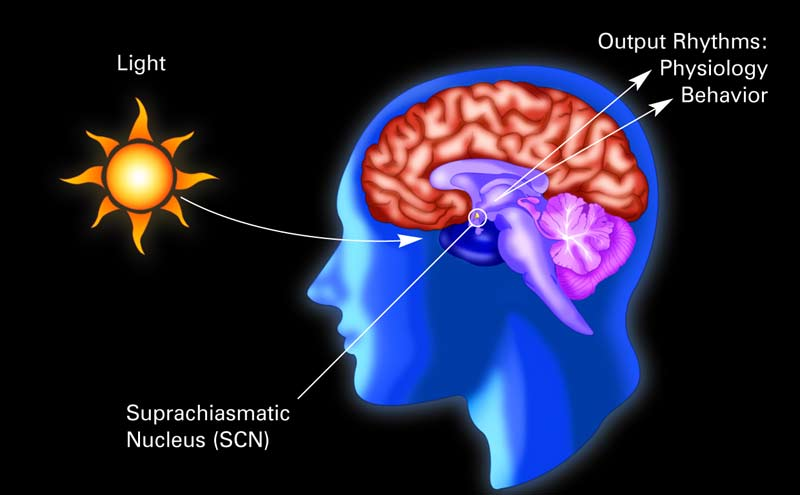
At the heart of your circadian system lies a cluster of approximately 20,000 neurons in your brain’s hypothalamus called the suprachiasmatic nucleus (SCN). This master clock coordinates the timing of physiological processes throughout your body, acting as the conductor of a vast biological orchestra.
The SCN receives direct input from specialized retinal ganglion cells in your eyes that detect light and darkness. These cells contain melanopsin, a photopigment that’s particularly sensitive to blue light (wavelengths around 480 nanometers). When light hits these cells, they send signals directly to the SCN, which then orchestrates circadian responses throughout the body.
Key Functions of the SCN:
- Regulates melatonin production from the pineal gland
- Controls core body temperature fluctuations
- Influences cortisol release patterns
- Coordinates peripheral clocks throughout the body
- Maintains approximately 24-hour rhythmicity even in constant darkness
Peripheral Clocks: The Cellular Symphony
Beyond the master clock, virtually every cell in your body contains its own molecular timepiece. These peripheral clocks exist in your liver, muscles, fat tissue, heart, kidneys, and even individual cells in culture. They operate through transcriptional-translational feedback loops involving core clock genes:
Core Clock Genes:
- CLOCK and BMAL1: Positive regulators that activate transcription
- PERIOD (PER1, PER2, PER3): Negative regulators that inhibit their own transcription
- CRYPTOCHROME (CRY1, CRY2): Work with PERIOD proteins to create negative feedback
- REV-ERBα and RORα: Fine-tune the system through additional feedback loops
These molecular clocks create oscillations with periods close to 24 hours, controlling the timing of gene expression, protein synthesis, and cellular processes throughout your body.
Chronotypes: Individual Differences in Circadian Timing
Not everyone’s internal clock runs at exactly the same pace or phase. Chronotypes represent individual differences in circadian timing preferences, largely determined by genetics:
Morning Larks (25% of population):
- Earlier bedtimes and wake times
- Peak performance in morning hours
- Advanced phase of core body temperature rhythm
- Often have shorter intrinsic circadian periods
Night Owls (25% of population):
- Later bedtimes and wake times
- Peak performance in evening hours
- Delayed phase of core body temperature rhythm
- Often have longer intrinsic circadian periods
Intermediate Types (50% of population):
- Moderate timing preferences
- Adaptable to various schedules
- Standard circadian phase relationships
Understanding your chronotype is crucial for optimizing sleep, work performance, and overall health within the constraints of modern society.
Light: The Primary Zeitgeber
The Physics of Circadian Light
Light serves as the primary zeitgeber (German for “time-giver”) that synchronizes internal clocks to the external world. However, not all light is created equal in terms of circadian impact:
Light Intensity and Timing:
- Morning Light: 1,000-10,000 lux advances circadian phase
- Evening Light: Even 100-200 lux can delay circadian phase
- Nighttime Light: As little as 15 lux can suppress melatonin production
- Seasonal Variation: Natural light ranges from 100,000 lux (sunny day) to 0.1 lux (moonlight)
Spectral Composition:
- Blue Light (450-490 nm): Most potent for circadian regulation
- Green Light (490-560 nm): Moderate circadian effects
- Red Light (620-750 nm): Minimal circadian disruption
- Infrared Light (750+ nm): No direct circadian effects
Duration and Pattern:
- Continuous light exposure more potent than intermittent
- Light history affects sensitivity (prior light exposure influences responses)
- Individual differences in light sensitivity based on genetics and age
Modern Light Environment Challenges
Our ancestors evolved under natural light-dark cycles with dramatic daily variations in light intensity and spectral composition. Modern environments present unprecedented challenges:
Indoor Light Deficiency:
- Typical indoor lighting: 200-500 lux
- Natural outdoor light: 10,000-100,000 lux
- Insufficient daytime light exposure weakens circadian signals
Evening Light Pollution:
- LED screens emit significant blue light
- Indoor lighting extends “biological daytime”
- Light pollution affects even outdoor nighttime light levels
Irregular Light Patterns:
- Shift work disrupts natural light exposure
- International travel creates rapid time zone changes
- Seasonal affective patterns in high latitudes
Circadian Regulation of Metabolism
The Metabolic Clock Network
Your metabolism operates on a precise 24-hour schedule, with the circadian system coordinating when you process nutrients most efficiently. This metabolic clockwork involves multiple tissues working in coordination:
Liver Clock:
- Controls glucose production and storage
- Regulates lipid synthesis and breakdown
- Manages drug metabolism timing
- Peak function during anticipated feeding times
Muscle Clock:
- Governs glucose uptake sensitivity
- Controls protein synthesis timing
- Regulates exercise capacity throughout the day
- Influences recovery and adaptation processes
Adipose Tissue Clock:
- Manages fat storage and release
- Controls insulin sensitivity in fat cells
- Regulates inflammatory responses
- Influences appetite-regulating hormone production
Pancreatic Clock:
- Times insulin release patterns
- Controls beta-cell function and regeneration
- Manages glucagon secretion
- Coordinates with other metabolic tissues
Circadian Insulin Sensitivity
One of the most clinically relevant aspects of circadian metabolism is the daily rhythm in insulin sensitivity:
Morning Pattern:
- Insulin sensitivity lowest upon waking
- Cortisol and growth hormone peak, promoting glucose release
- “Dawn phenomenon” causes blood sugar rise even without eating
- Glucose tolerance begins improving after morning cortisol peak
Afternoon/Evening Pattern:
- Peak insulin sensitivity typically occurs in mid-afternoon
- Glucose tolerance remains good through early evening
- Late evening shows declining insulin sensitivity
- Nighttime eating causes exaggerated glucose and insulin responses
Research Findings:
- Identical meals cause 20-30% higher glucose responses when consumed in evening vs. morning
- Night shift workers show increased diabetes risk
- Time-restricted eating can improve insulin sensitivity even without weight loss
Metabolic Consequences of Circadian Disruption
Shift Work and Metabolic Health: Studies of shift workers reveal profound metabolic consequences of circadian disruption:
- 40% increased risk of metabolic syndrome
- 15-30% higher rates of type 2 diabetes
- Increased obesity and difficulty with weight management
- Altered gut microbiome composition affecting metabolism
Social Jetlag: The mismatch between biological and social time affects metabolic health:
- Each hour of social jetlag increases obesity risk by 33%
- Weekend sleep schedule delays associated with worse glucose control
- Irregular meal timing correlates with metabolic dysfunction
- Even healthy individuals show metabolic impairment with circadian disruption
Sleep Architecture and Circadian Control
The Two-Process Model of Sleep Regulation
Sleep is regulated by two primary mechanisms that interact with circadian rhythms:
Process S (Sleep Homeostasis):
- Builds up during wakefulness through adenosine accumulation
- Creates increasing sleep pressure throughout the day
- Dissipated during sleep, particularly deep sleep stages
- Affected by caffeine, which blocks adenosine receptors
Process C (Circadian Process):
- Promotes wakefulness during biological day
- Allows sleep during biological night
- Controlled by SCN and influenced by light exposure
- Independent of how long you’ve been awake
The interaction between these processes determines sleep timing, quality, and duration.
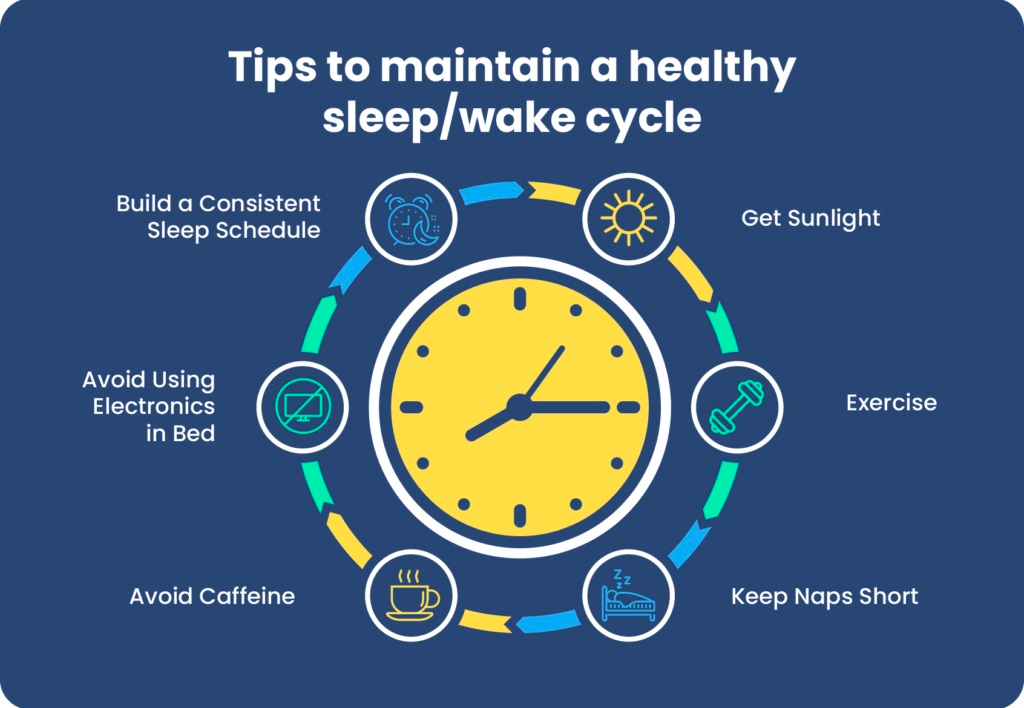
Circadian Sleep Stages
Different sleep stages occur at specific circadian phases:
Deep Sleep (Slow-Wave Sleep):
- Highest in first third of biological night
- Coincides with lowest core body temperature
- Enhanced by proper circadian alignment
- Critical for physical recovery and memory consolidation
REM Sleep:
- Peaks in final third of biological night
- Occurs during rising core body temperature
- Important for emotional processing and creativity
- Suppressed by alcohol and many medications
Sleep Spindles and K-Complexes:
- Show circadian variation in density and characteristics
- Influenced by prior light exposure and circadian phase
- May serve as markers of circadian sleep timing
Light Exposure and Sleep Quality
Morning Light Benefits:
- Advances sleep timing for night owls
- Improves sleep efficiency and depth
- Reduces sleep latency (time to fall asleep)
- Enhances daytime alertness
Evening Light Consequences:
- Delays melatonin onset by 1-3 hours
- Reduces total sleep time
- Impairs deep sleep quality
- Creates phase delays that accumulate over time
Research Evidence:
- 30 minutes of 10,000 lux morning light improves sleep quality in 85% of participants
- Evening blue light exposure delays sleep timing by an average of 90 minutes
- Light therapy is as effective as melatonin for many sleep disorders
Mental Health and Circadian Rhythms
The Circadian-Mood Connection
The relationship between circadian rhythms and mental health is bidirectional and profound:
Neurotransmitter Rhythms:
- Serotonin: Shows circadian variation, affects mood and sleep
- Dopamine: Daily rhythms influence motivation and reward processing
- GABA: Circadian changes affect anxiety and relaxation
- Norepinephrine: Daily patterns influence alertness and stress response
Hormone Rhythms:
- Cortisol: Peak morning levels provide energy; disruption linked to depression
- Melatonin: Evening rise promotes sleep; suppression affects mood
- Growth Hormone: Nighttime release important for recovery and mood stability
- Thyroid Hormones: Circadian patterns affect energy and mood regulation
Depression and Circadian Dysfunction
Seasonal Affective Disorder (SAD):
- Affects 1-10% of population depending on latitude
- Caused by insufficient light exposure during winter months
- Responds dramatically to bright light therapy
- Demonstrates clear link between light, circadian rhythms, and mood
Major Depression:
- 90% of depressed individuals show circadian abnormalities
- Earlier REM sleep onset and reduced REM latency
- Flattened cortisol rhythms and altered melatonin patterns
- Light therapy effective even for non-seasonal depression
- Extreme sensitivity to light and circadian disruption
- Manic episodes often triggered by sleep disruption
- Dark therapy (reducing light exposure) can help stabilize mood
- Circadian rhythm disruption may be central to the disorder
Anxiety and Circadian Rhythms
Circadian Anxiety Patterns:
- Anxiety typically peaks in late afternoon/early evening
- Morning anxiety often related to cortisol awakening response
- Disrupted circadian rhythms increase anxiety sensitivity
- Light exposure can modulate anxiety through multiple pathways
Mechanisms:
- Circadian disruption affects HPA (hypothalamic-pituitary-adrenal) axis
- Altered GABA signaling in SCN affects anxiety regulation
- Sleep disruption increases stress reactivity
- Light exposure influences amygdala reactivity
Cognitive Performance and Circadian Timing
Attention and Alertness:
- Peak alertness occurs during circadian afternoon (2-6 PM for average person)
- Minimum alertness during circadian night (2-6 AM)
- Individual differences based on chronotype
- Light exposure can shift timing of peak performance
Memory and Learning:
- Different types of memory consolidation occur during specific sleep stages
- Circadian timing affects encoding and retrieval
- Morning light exposure improves afternoon cognitive performance
- Circadian disruption impairs memory formation
Executive Function:
- Decision-making ability varies across circadian cycle
- Impulse control worst during circadian night
- Complex problem-solving peaks during optimal circadian phase
- Sleep deprivation particularly impairs executive functions
Optimizing Light Exposure: Evidence-Based Strategies
Morning Light Optimization
Natural Light Exposure:
- Timing: Within 30-60 minutes of waking
- Duration: 10-30 minutes minimum
- Intensity: 1,000-10,000 lux (outdoor light preferred)
- Consistency: Daily exposure, even on cloudy days
Light Box Therapy:
- Intensity: 10,000 lux at 16-24 inches distance
- Duration: 20-30 minutes for most people
- Timing: Immediately upon waking for phase advance
- Seasonal Adjustment: Longer exposure during winter months
Light Glasses:
- Portable option for consistent morning light
- 480 nm peak wavelength most effective
- 15-30 minutes daily exposure
- Useful for shift workers and travelers
Daytime Light Strategies
Workplace Lighting:
- Position workstation near windows when possible
- Use daylight-spectrum bulbs (5000-6500K)
- Take outdoor breaks, especially during winter
- Consider circadian lighting systems that adjust throughout day
Activity-Based Lighting:
- Bright light for focused work (1000+ lux)
- Moderate light for routine tasks (500-1000 lux)
- Dim light for relaxation activities (<200 lux)
- Blue-enriched light for alertness when needed
Evening Light Management
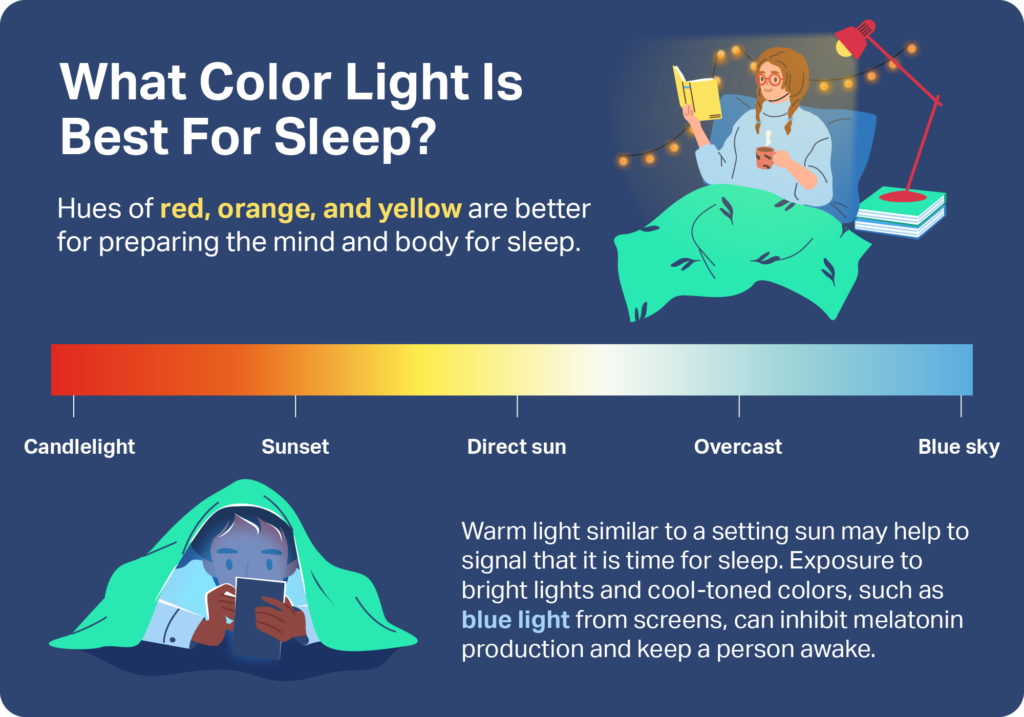
Blue Light Reduction:
- Use blue light filtering glasses 2-3 hours before bedtime
- Enable night mode on electronic devices
- Choose warm-colored bulbs (2700K or lower) for evening lighting
- Consider blue light filtering bulbs for main living areas
Light Timing Strategies:
- Dim lights 2-3 hours before intended bedtime
- Use red or amber lighting for late evening activities
- Minimize screen time 1 hour before sleep
- Create consistent evening light routine
Bedroom Optimization:
- Complete darkness during sleep (blackout curtains, eye masks)
- Remove or cover LED lights from electronics
- Use dim red light for nighttime navigation
- Consider smart lighting that gradually dims automatically
Seasonal Light Adjustments
Winter Strategies:
- Increase morning light exposure duration
- Use light boxes during darker months
- Maximize outdoor time during available daylight
- Consider dawn simulation alarm clocks
Summer Strategies:
- Use blackout curtains to prevent early morning light
- Be cautious of late evening light exposure
- Maintain consistent sleep schedule despite longer days
- Use air conditioning to prevent temperature disruption of sleep
Advanced Circadian Optimization Techniques
Time-Restricted Eating
Circadian Fasting Windows:
- Align eating with natural daylight hours
- 12-14 hour daily fasting window most sustainable
- Earlier eating windows generally more beneficial
- Avoid eating 3-4 hours before bedtime
Research Findings:
- Time-restricted eating improves insulin sensitivity independent of weight loss
- Earlier eating windows show greater metabolic benefits
- Combining with morning light exposure enhances effects
- May help reset disrupted circadian rhythms
Exercise Timing
Circadian Exercise Effects:
- Morning Exercise: Advances circadian phase, improves evening sleep
- Afternoon Exercise: Peak physical performance window for most people
- Evening Exercise: May delay circadian phase if too intense or late
- Consistency: Regular exercise timing helps reinforce circadian rhythms
Optimal Timing Strategies:
- High-intensity exercise: Late morning to early afternoon
- Strength training: Afternoon when core temperature peaks
- Gentle exercise: Evening yoga or walking acceptable
- Avoid vigorous exercise within 3 hours of bedtime
Temperature Regulation
Core Body Temperature Rhythms:
- Lowest around 4-6 AM, highest around 6-8 PM
- Temperature changes signal circadian phase to peripheral clocks
- Disrupted temperature rhythms associated with circadian disorders
- External temperature manipulation can influence circadian timing
Practical Applications:
- Cool sleeping environment (65-68°F optimal)
- Warm bath 90 minutes before bedtime promotes temperature drop
- Morning cold exposure can enhance alertness
- Avoid overheating during sleep (affects sleep quality)
Supplement Strategies
Melatonin:
- Timing: 30 minutes to 2 hours before desired bedtime
- Dosage: 0.5-3 mg effective for most people (lower often better)
- Use Cases: Jet lag, shift work, delayed sleep phase
- Cautions: Can cause grogginess if timed incorrectly
Vitamin D:
- Deficiency associated with circadian dysfunction
- Morning supplementation may support circadian rhythms
- Important for seasonal affective disorder
- Typical dose: 1000-4000 IU daily
Magnesium:
- Evening supplementation may improve sleep quality
- Supports GABA function and muscle relaxation
- Chelated forms generally better absorbed
- Typical dose: 200-400 mg before bedtime
Technology and Circadian Health
Circadian Lighting Technology
Smart Lighting Systems:
- Automatically adjust color temperature throughout day
- Can be programmed for individual chronotypes
- Integration with sleep tracking devices
- Gradually dim/brighten to simulate natural light patterns
Dawn Simulation Devices:
- Gradually increase light intensity before wake time
- Particularly helpful during winter months
- Can improve mood and reduce grogginess
- Most effective with 15-30 minute gradual increase
Wearable Technology
Sleep and Circadian Tracking:
- Monitor sleep stages and timing
- Track light exposure throughout day
- Provide personalized recommendations
- Help identify patterns and disruptions
Limitations and Considerations:
- Accuracy varies between devices and individuals
- Should complement, not replace, good sleep hygiene
- Focus on trends rather than precise measurements
- Privacy considerations with sleep data
Apps and Digital Tools
Blue Light Management:
- F.lux, Night Shift automatically adjust screen color temperature
- More aggressive filtering may be needed for sensitive individuals
- Consider complete screen avoidance rather than just filtering
- Combine with ambient lighting adjustments
Circadian Rhythm Apps:
- Provide personalized light exposure recommendations
- Track mood and energy in relation to light exposure
- Offer guided programs for circadian optimization
- Help maintain consistency across time zones
Special Populations and Circumstances
Shift Workers
Challenges:
- Working against natural circadian preferences
- Irregular and insufficient sleep opportunities
- Limited access to natural light at appropriate times
- Social and family schedule conflicts
Evidence-Based Strategies:
- Bright light exposure during work hours (2500-10000 lux)
- Dark sunglasses when driving home after night shift
- Consistent sleep schedule even on days off
- Strategic caffeine use early in shift, avoid before sleep
Travelers and Jet Lag
Jet Lag Mechanisms:
- Misalignment between internal clock and external time cues
- Eastward travel generally more difficult than westward
- Older adults experience more severe and prolonged jet lag
- Individual differences in adaptation rate
Prevention and Treatment:
- Pre-travel light exposure to begin shifting circadian phase
- Strategic light exposure and avoidance at destination
- Melatonin timing adjusted for destination time zone
- Maintain hydration and avoid alcohol during travel
Older Adults
Age-Related Changes:
- Earlier chronotype (advanced sleep phase)
- Reduced amplitude of circadian rhythms
- Decreased light sensitivity
- More frequent circadian rhythm disorders
Optimization Strategies:
- Increased light exposure intensity and duration
- Earlier morning light, dimmer evening light
- Consistent daily routines
- Social engagement to reinforce circadian cues
Teenagers and Young Adults
Developmental Considerations:
- Natural delay in circadian timing during adolescence
- Peak delay around age 19-20
- Conflict with early school start times
- High sensitivity to evening light exposure
Practical Approaches:
- Advocate for later school start times when possible
- Strong morning light exposure to counteract delays
- Strict evening light hygiene
- Education about circadian health importance
Measuring and Monitoring Circadian Health
Subjective Assessment Tools
Morningness-Eveningness Questionnaire (MEQ):
- Validated tool for determining chronotype
- 19 questions about timing preferences
- Helps personalize circadian optimization strategies
- Available online and widely used in research
Sleep Diaries:
- Track sleep timing, quality, and factors affecting sleep
- Include light exposure, exercise, meals, and mood
- Identify patterns and potential issues
- Complement objective measurements
Objective Biomarkers
Dim Light Melatonin Onset (DLMO):
- Gold standard for measuring circadian phase
- Collected in laboratory under controlled light conditions
- Typically occurs 2-3 hours before habitual bedtime
- Useful for diagnosing circadian rhythm disorders
Core Body Temperature:
- Continuous monitoring reveals circadian phase
- Minimum typically occurs 2-4 hours before habitual wake time
- Can be measured with specialized sensors
- Affected by activity, environment, and health status
Cortisol Awakening Response:
- Saliva samples collected immediately upon waking and 30 minutes later
- Healthy response shows 50-100% increase
- Reflects HPA axis function and circadian health
- Simple home collection possible
Wearable Monitoring
Actigraphy:
- Wrist-worn devices measuring movement patterns
- Estimates sleep-wake timing and light exposure
- Useful for identifying circadian rhythm disorders
- Less accurate than polysomnography but more practical
Heart Rate Variability (HRV):
- Shows circadian patterns in autonomic nervous system activity
- Can indicate circadian health and stress levels
- Many consumer devices now include HRV monitoring
- Best measured consistently at same time daily
Clinical Applications and Medical Implications
Circadian Medicine
Chronotherapy:
- Timing medical treatments to circadian rhythms
- Blood pressure medications more effective when timed appropriately
- Cancer chemotherapy shows time-of-day effects
- Vaccination responses vary with circadian timing
Circadian Rhythm Sleep Disorders:
- Delayed Sleep Phase Disorder: Common in teenagers and young adults
- Advanced Sleep Phase Disorder: More common in older adults
- Non-24-Hour Sleep-Wake Disorder: Often affects blind individuals
- Irregular Sleep-Wake Rhythm Disorder: Common in dementia
Treatment Approaches:
- Light therapy as first-line treatment for many disorders
- Melatonin supplementation for specific conditions
- Chronotherapy (gradually shifting sleep times)
- Environmental modifications and sleep hygiene
Mental Health Applications
Light Therapy for Depression:
- 10,000 lux for 30 minutes daily shows antidepressant effects
- Particularly effective for seasonal affective disorder
- May be as effective as antidepressant medications
- Often used as adjunct therapy with other treatments
Bipolar Disorder Management:
- Dark therapy during manic episodes
- Regular light-dark cycles help stabilize mood
- Sleep regularity crucial for preventing episodes
- Circadian rhythm monitoring guides treatment
Metabolic Health Applications
Diabetes Management:
- Meal timing affects glucose control independent of food composition
- Earlier eating improves glycemic control
- Light exposure can influence insulin sensitivity
- Circadian disruption worsens diabetes outcomes
Weight Management:
- Late eating associated with weight gain and difficulty losing weight
- Circadian alignment improves metabolic efficiency
- Light exposure affects appetite-regulating hormones
- Shift workers at higher risk for obesity
Future Directions in Circadian Research
Emerging Technologies
Precision Circadian Medicine:
- Genetic testing to predict individual circadian responses
- Personalized light therapy prescriptions
- Chronotype-specific medical treatment timing
- Biomarker-guided circadian interventions
Advanced Light Therapy:
- Targeted wavelength therapies
- Programmable contact lenses delivering light therapy
- Precise light dosing based on individual sensitivity
- Integration with smart home systems
Research Frontiers
Circadian Epigenetics:
- How circadian rhythms affect gene expression
- Transgenerational effects of circadian disruption
- Epigenetic targets for circadian optimization
- Relationship between aging and circadian function
Microbiome-Circadian Interactions:
- Gut bacteria show circadian rhythms
- Microbiome affects circadian function
- Potential for probiotic circadian interventions
- Time-restricted eating effects on microbiome
Circadian Pharmacology:
- Drugs that target circadian mechanisms
- Improved chronotherapy protocols
- Circadian timing of existing medications
- Development of circadian biomarkers for drug development
Practical Implementation Guide
Getting Started: The 4-Week Circadian Reset
Week 1: Foundation Building
- Establish consistent wake time (±30 minutes daily)
- Get morning light exposure within 60 minutes of waking
- Begin evening light reduction 2 hours before bed
- Track sleep timing and quality in diary
Week 2: Optimization
- Increase morning light exposure duration and intensity
- Add blue light filtering glasses for evening screen use
- Implement time-restricted eating (12-hour window)
- Begin regular exercise routine with consistent timing
Week 3: Fine-Tuning
- Adjust light exposure timing based on individual response
- Optimize bedroom environment for sleep
- Add temperature regulation strategies
- Consider targeted supplements if needed
Week 4: Integration
- Establish long-term sustainable routines
- Identify and address remaining challenges
- Plan for special circumstances (travel, schedule changes)
- Monitor progress with objective measures
Troubleshooting Common Issues
Difficulty Waking Up:
- Increase morning light intensity and duration
- Consider dawn simulation alarm clock
- Ensure adequate sleep duration (7-9 hours)
- Evaluate evening light exposure and timing
Evening Alertness Problems:
- Reduce blue light exposure earlier in evening
- Lower ambient lighting 3-4 hours before bed
- Avoid caffeine after 2 PM
- Consider magnesium supplementation
Inconsistent Sleep Schedule:
- Prioritize wake time consistency over bedtime
- Use light exposure to shift circadian timing
- Address social and work schedule conflicts
- Consider chronotype when setting schedules
Long-Term Maintenance
Seasonal Adjustments:
- Increase light therapy duration during winter months
- Adjust eating and exercise timing with daylight changes
- Monitor mood and energy levels seasonally
- Prepare for seasonal transitions in advance
Life Stage Adaptations:
- Adjust strategies as chronotype changes with age
- Accommodate changing sleep needs
- Modify approaches for shift work or travel
- Consider family schedules and responsibilities
Conclusion: Embracing Your Natural Rhythm
The science of circadian rhythms reveals that optimal health isn’t just about what we do, but when we do it. Our bodies operate on sophisticated biological clocks that have evolved over millions of years to synchronize with the natural world’s light-dark cycles. In our modern environment, we have the power—and responsibility—to work with these rhythms rather than against them.
The evidence is overwhelming: proper circadian alignment improves virtually every aspect of health, from metabolic efficiency and immune function to cognitive performance and emotional well-being. Yet this powerful biological system requires consistent, intentional care to function optimally in our artificially lit, around-the-clock society.
Light exposure emerges as the master key to circadian health—bright light at the right times can advance or delay your internal clock, while inappropriate light exposure can disrupt sleep, mood, and metabolism for days. The strategies outlined in this guide provide a roadmap for harnessing light’s power to optimize your circadian rhythms.
Remember that circadian optimization is a personalized journey. Your chronotype, lifestyle, age, and health status all influence the best approach for you. Start with the foundational strategies—consistent wake times, morning light exposure, and evening light reduction—then fine-tune based on your individual response.
The field of circadian medicine is rapidly evolving, with new discoveries regularly emerging about the profound ways our biological clocks influence health and disease. By understanding and working with your circadian rhythms now, you’re not just improving your immediate well-being but potentially adding years of healthy life and enhancing your resilience against age-related diseases.
Your circadian system is one of the most powerful, yet underutilized, tools for optimizing human health and performance. The question isn’t whether you have circadian rhythms—you do, and they’re running 24/7 whether you pay attention to them or not. The question is whether you’ll learn to work with them to unlock your full potential for health, energy, and longevity.
The time to start is now. Your body’s ancient wisdom is ready to guide you toward better health—you just need to provide the right signals at the right times.